Square footage comes first
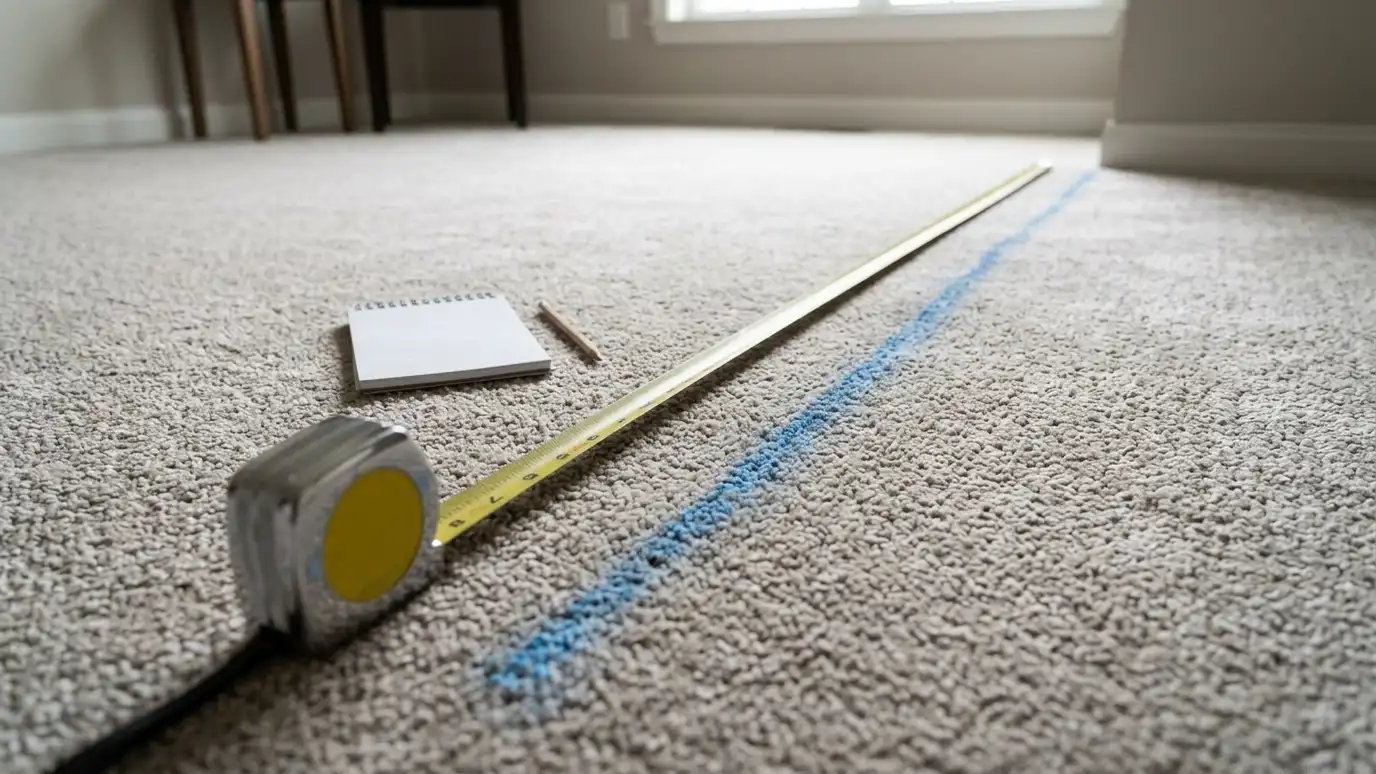
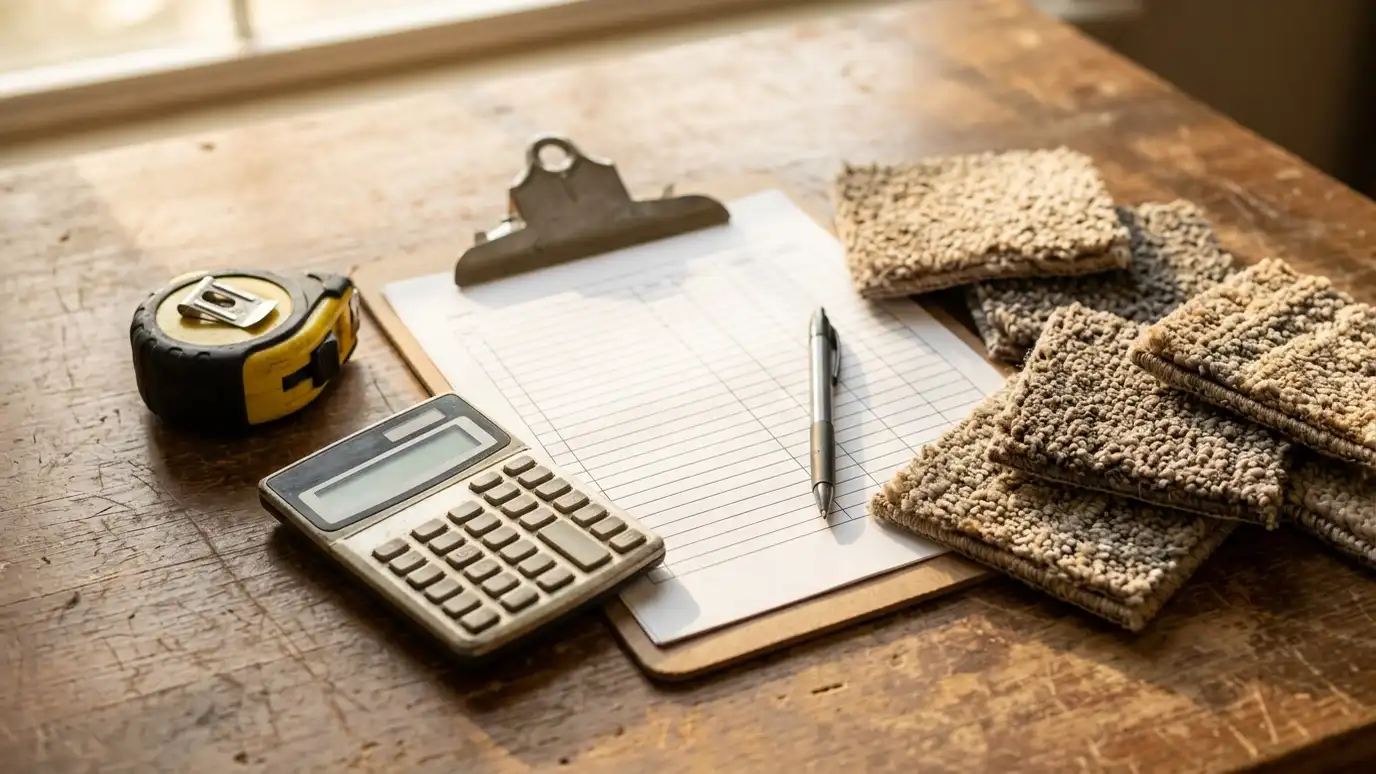
Carpet is measured by area, and the starting point is the total square footage of the rooms, halls, closets and stairs. Because carpet comes on rolls of a fixed width, the amount you actually buy is often more than the floor area, since seams and cutting leave waste.
Ask every company how it measured your rooms and how it planned the roll layout, so you are comparing quotes for the same amount of carpet.
Stairs are measured by the step, and they take more labor than the same area of flat floor.
Fiber and construction
Nylon, polyester, triexta, olefin and wool each cost differently, and within each fiber, face weight, density and twist change the cost further.
A lower price at purchase can mean a carpet that mats or wears faster, and a higher price can mean years of looking fresh, so think about how long you plan to stay and how hard the rooms work.
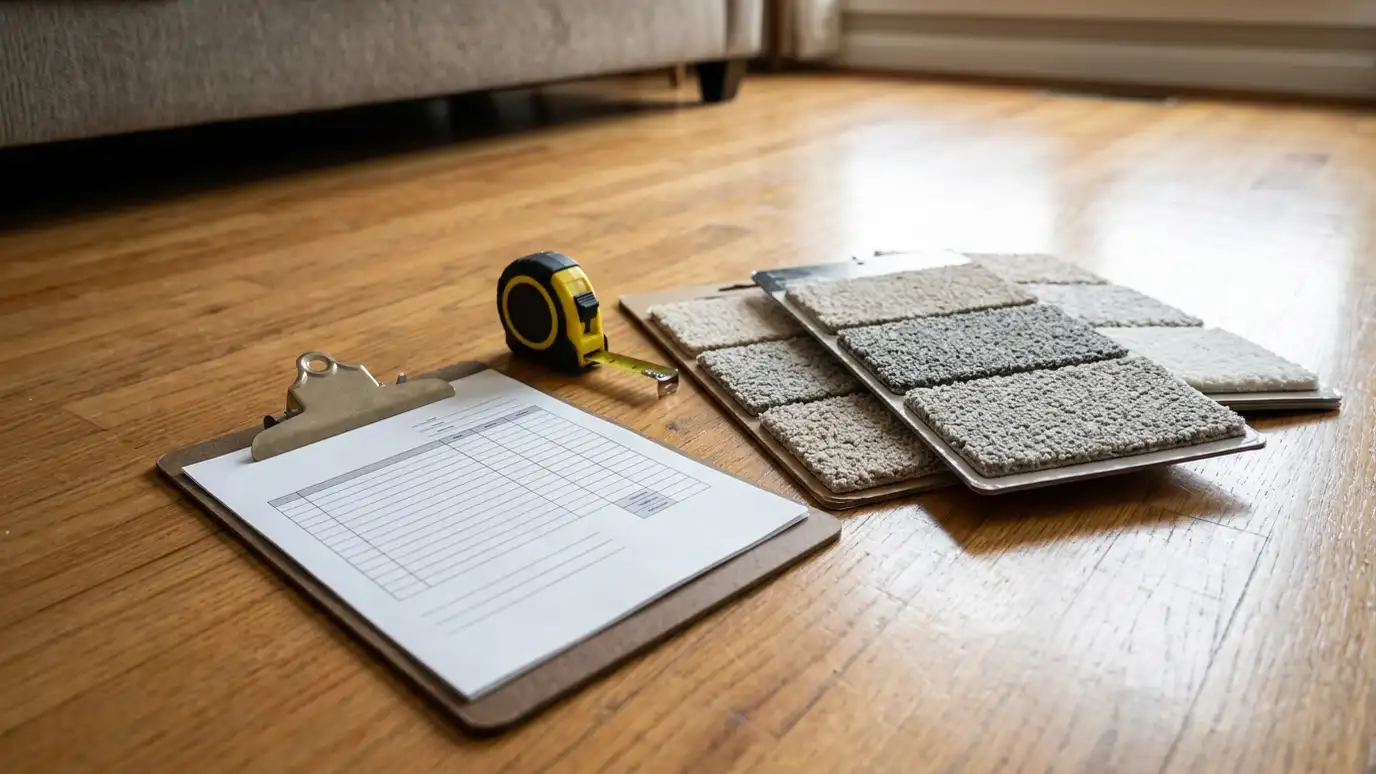
We lay out the trade-offs plainly and bring samples so you can feel what a difference in construction means.
Padding matters more than most people expect
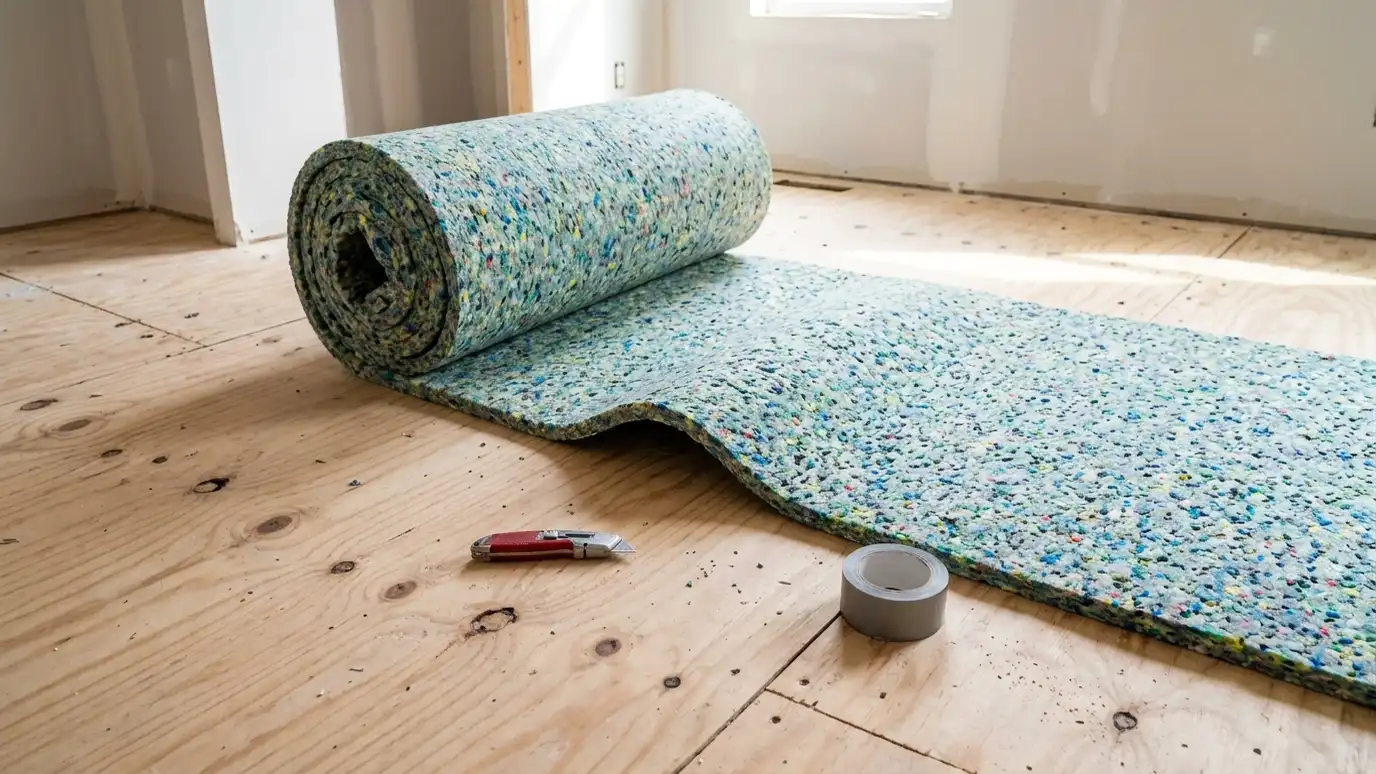
Pad type, thickness and density change both cost and performance. A good pad supports the carpet, adds comfort and sound control and helps carpet last.
Skipping on the pad to save at the start often costs more later, because worn pad shortens carpet life.
Ask each quote which pad is included, its thickness and its density, and whether it suits the carpet maker guidance.
Removal, furniture and prep
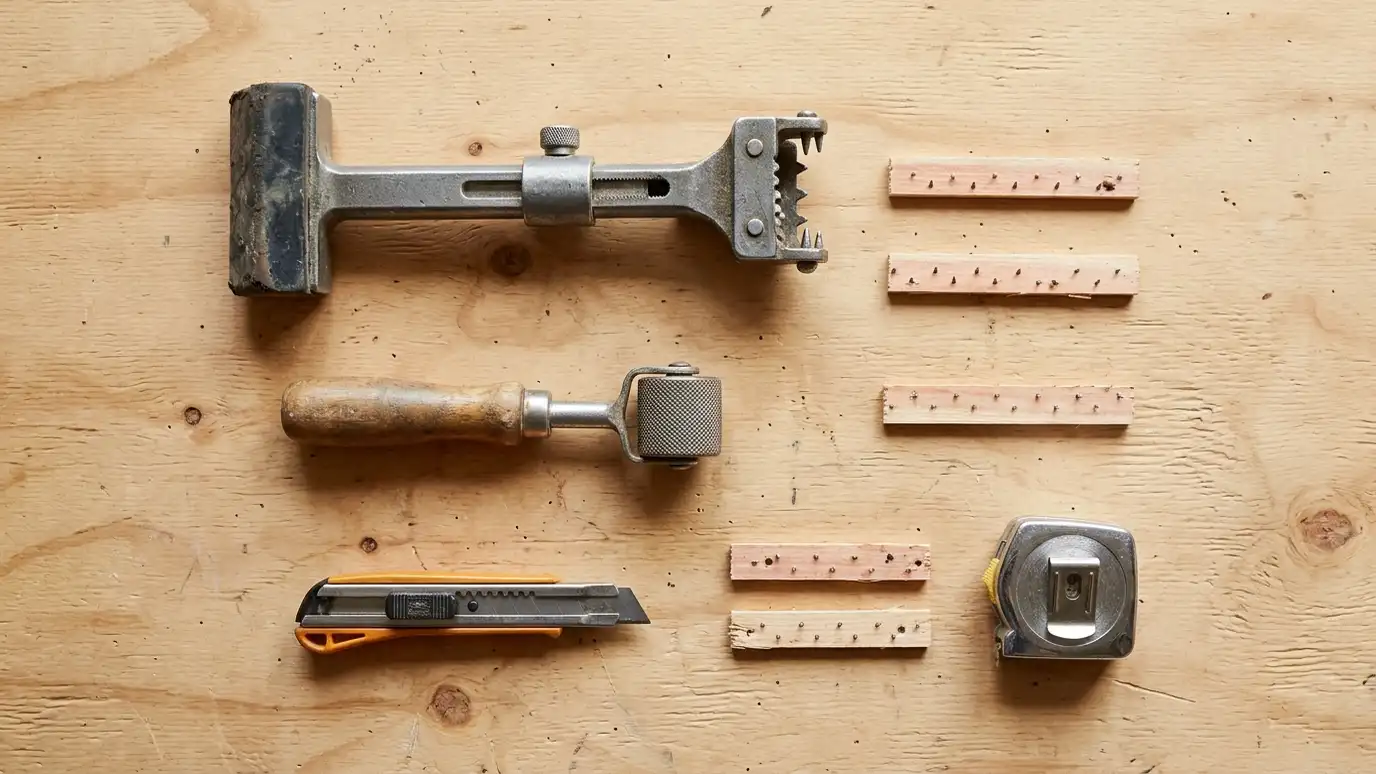
Taking out old carpet and pad, hauling it away, moving furniture and correcting a rough subfloor are separate pieces of work, and one quote may include them while another does not.
Concrete moisture, squeaky plywood and old adhesive can add steps.
Tell the estimator about these details early, and the number you get will be closer to the final one.
Seams, transitions and extras
Transition strips, stair details, custom borders, bound rugs and pattern matching all add materials and time.
A patterned carpet needs extra material for matching, and curved stairs need templates and careful cutting.
List every extra you want so each company prices the same job.
Comparing quotes fairly
Give each company the same information and ask for the same breakdown: rooms and square footage, carpet name and specification, pad, removal, moving, transitions, stairs, cleanup and timeline.
A low quote that leaves out half of those items is not a bargain, and a high quote may simply be more complete.
Our quote scorecard helps you line up proposals using your own priorities.
Compare scope and specifications before price: rooms, carpet, pad, removal, moving and stairs should be written down in every quote.