Act fast and blot
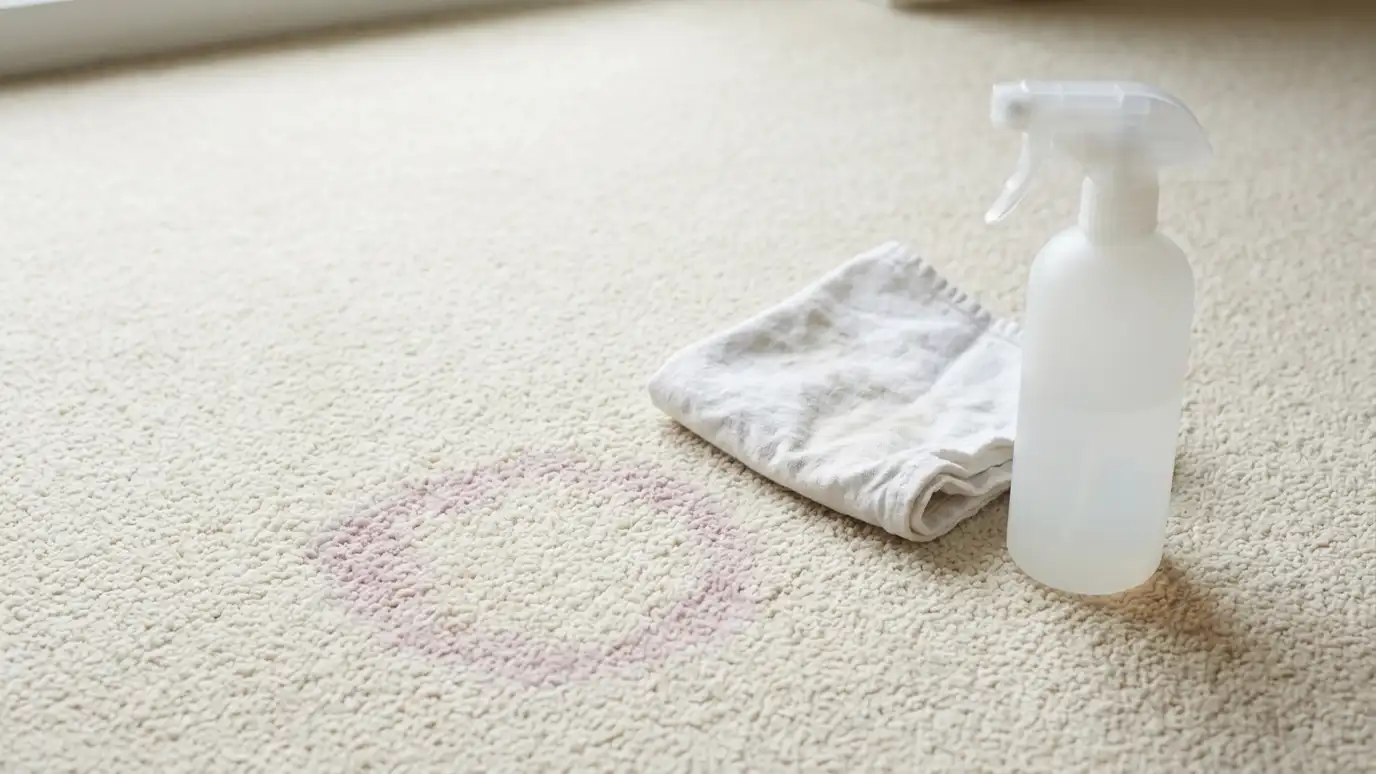
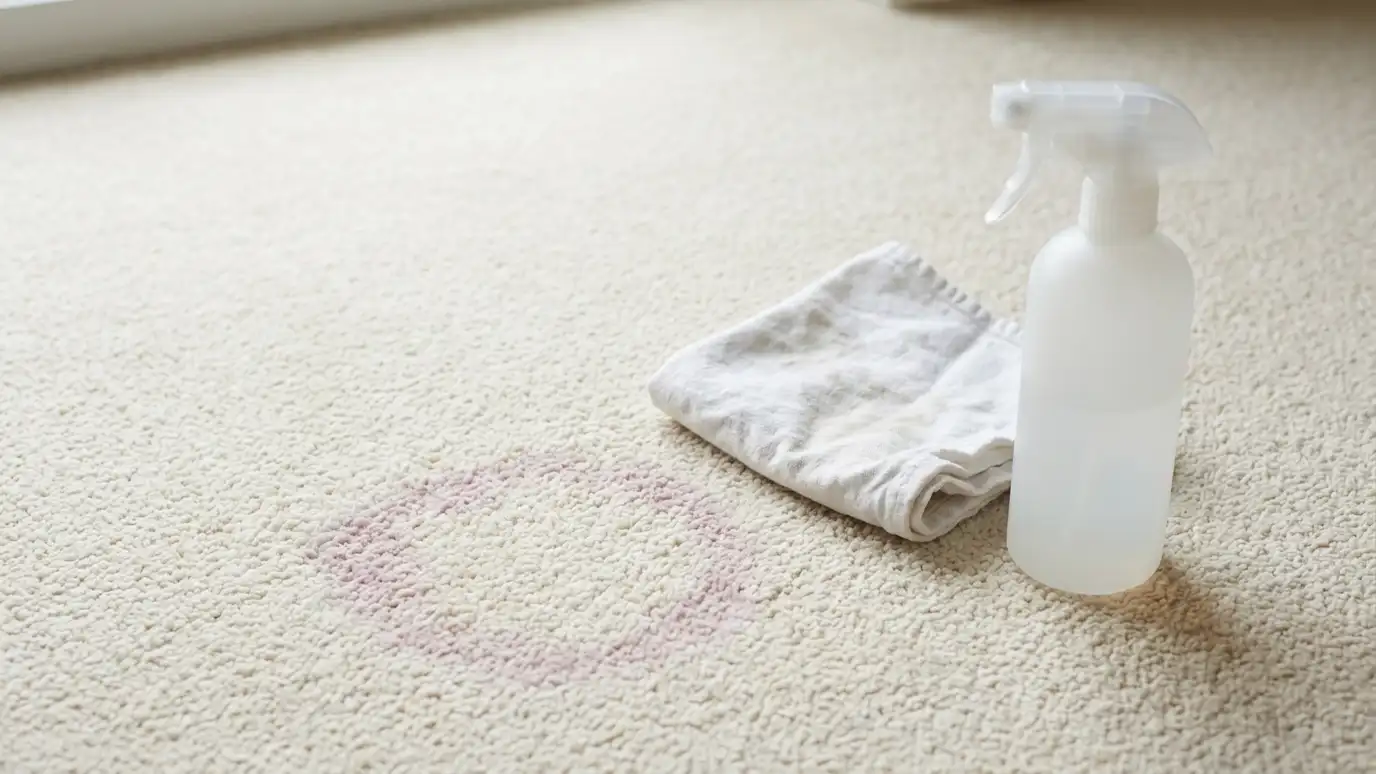
The first minutes matter most. Lift solids with a spoon, then blot liquids with a clean white cloth or paper towels, pressing down and lifting.
Work from the outside of the spill toward the center so it does not spread.
Never rub or scrub, which pushes the stain deeper and can damage the pile.
Use cool water and mild products
For most spills, a small amount of cool water and a drop of mild dish soap in a cup of water is a safe first try. Blot, do not soak.
Avoid hot water on unknown stains, since heat can set some of them.
Test any product on a hidden spot first.
Common stains
Coffee and tea respond to mild detergent solutions. Red wine often lifts if you blot quickly and use cool water, and some people use a wine-safe spotter. Grease needs a dry solvent spotter.
Ink and paint depend on the type and may need professional help.
Food and mud are easier once they dry and can be vacuumed first.
Pet accidents
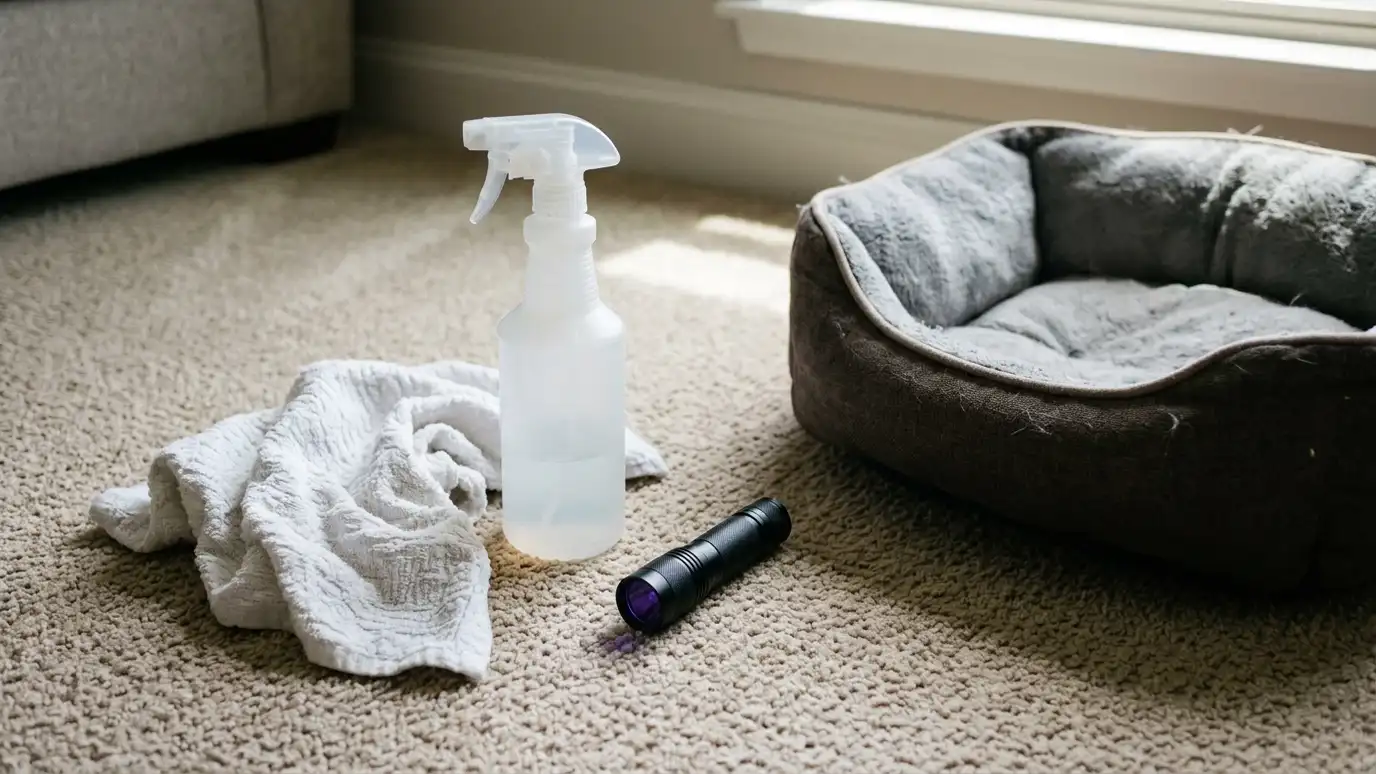
Blot up as much liquid as possible, then use an enzyme cleaner made for pet accidents. Let it work as directed and blot again.
Avoid ammonia, which can attract pets back.
If accidents soak through to the pad or are old, call us for treatment.
What not to do
Do not use harsh bleach, strong alkaline cleaners or steam on unknown stains. Do not over-wet the carpet, which can damage the backing and bring stains back.
Do not mix cleaning products.
If you are unsure, stop and call.
When to call a professional
Call when a stain is large, old, from an unknown source or will not lift. Call for dye stains, rust, ink, heavy grease and repeat pet accidents.
Early professional help can save carpet.
We test products, treat stains carefully and tell you honestly what is possible.
Blot, never rub, use cool water and mild soap first, test products in a hidden spot and call for help when a stain will not lift.