
Start with a dry floor
Carpet and pad do poorly with repeated wetting. Before you plan carpet, fix leaks, check drainage, gutters and grading and look for signs of past moisture.
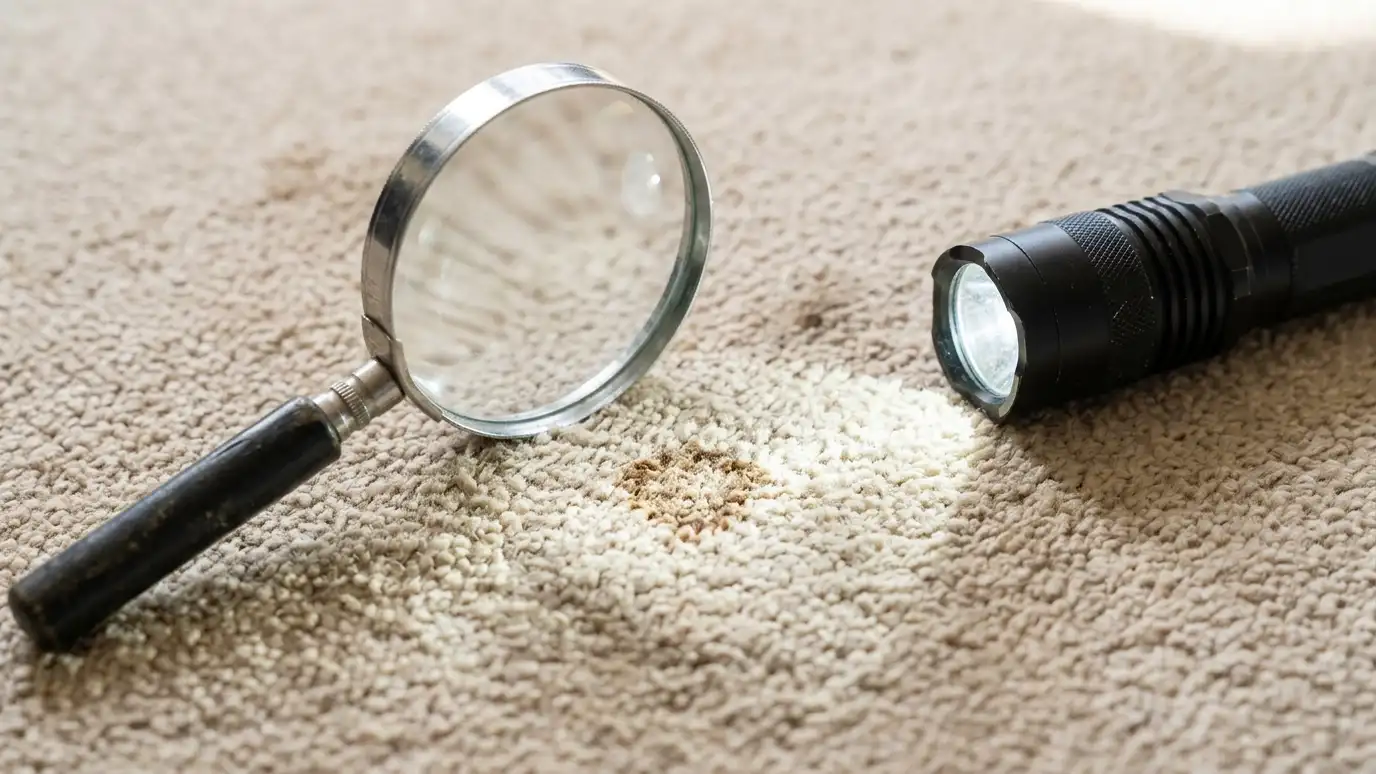
Stains, a musty smell and white powder on concrete are warning signs.
If moisture is a problem, address it first, and talk with a qualified professional if needed.
Test when it makes sense
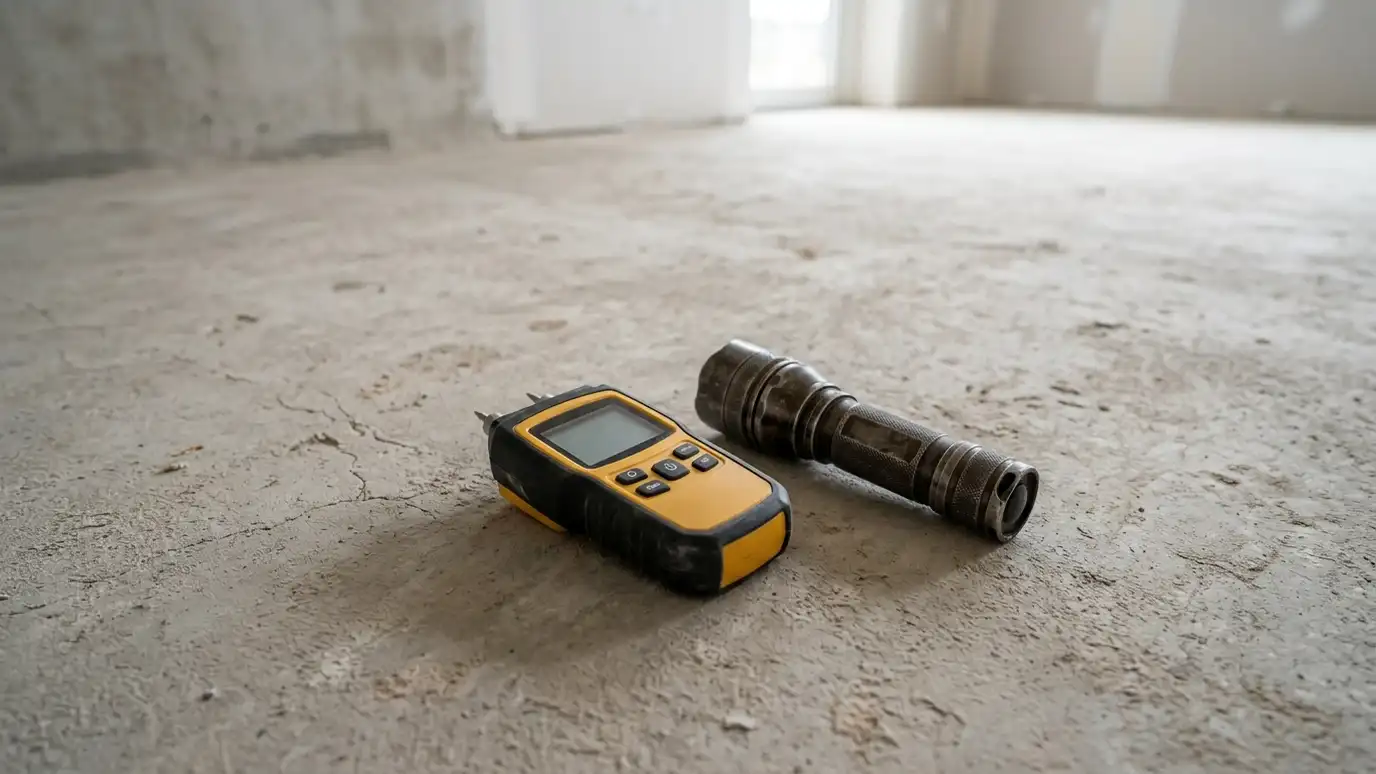
Moisture tests give clearer answers than guesses. Several accepted methods exist for concrete, and some carpet and adhesive makers specify limits.
We explain the options and when testing is worth doing.
A test is not a promise, but it helps you plan.
Prepare the slab
Concrete should be clean, flat and free of paint, sealers and old adhesive. Cracks and low spots are filled and smoothed.
Prep affects how carpet lies and how long adhesive holds.
We list prep in the written scope.
Pick moisture-aware padding
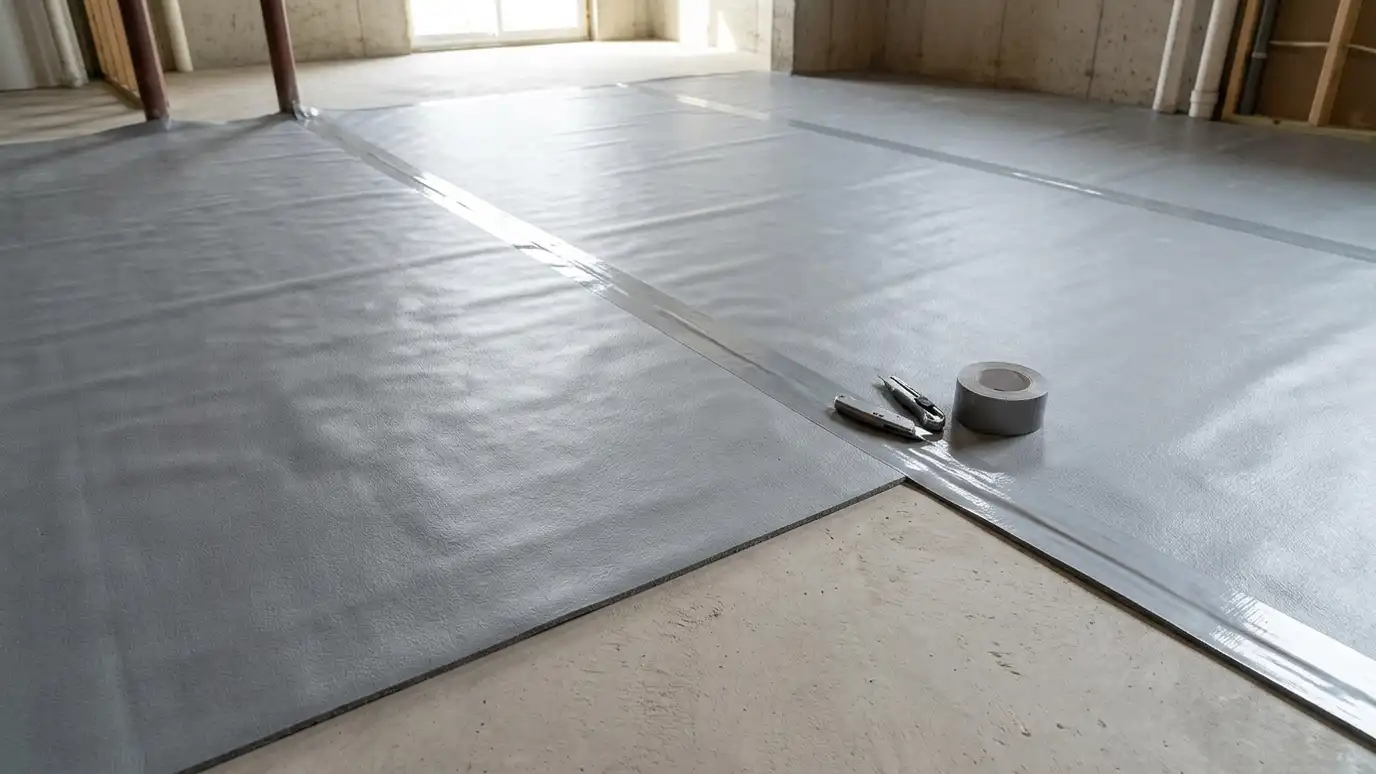
Moisture-barrier and closed-cell pads help limit moisture reaching the cushion. Tape and seal joints as directed.
Some jobs use glue-down carpet or carpet tile instead of a pad.
We choose a system that fits the room.
Choose a tolerant carpet
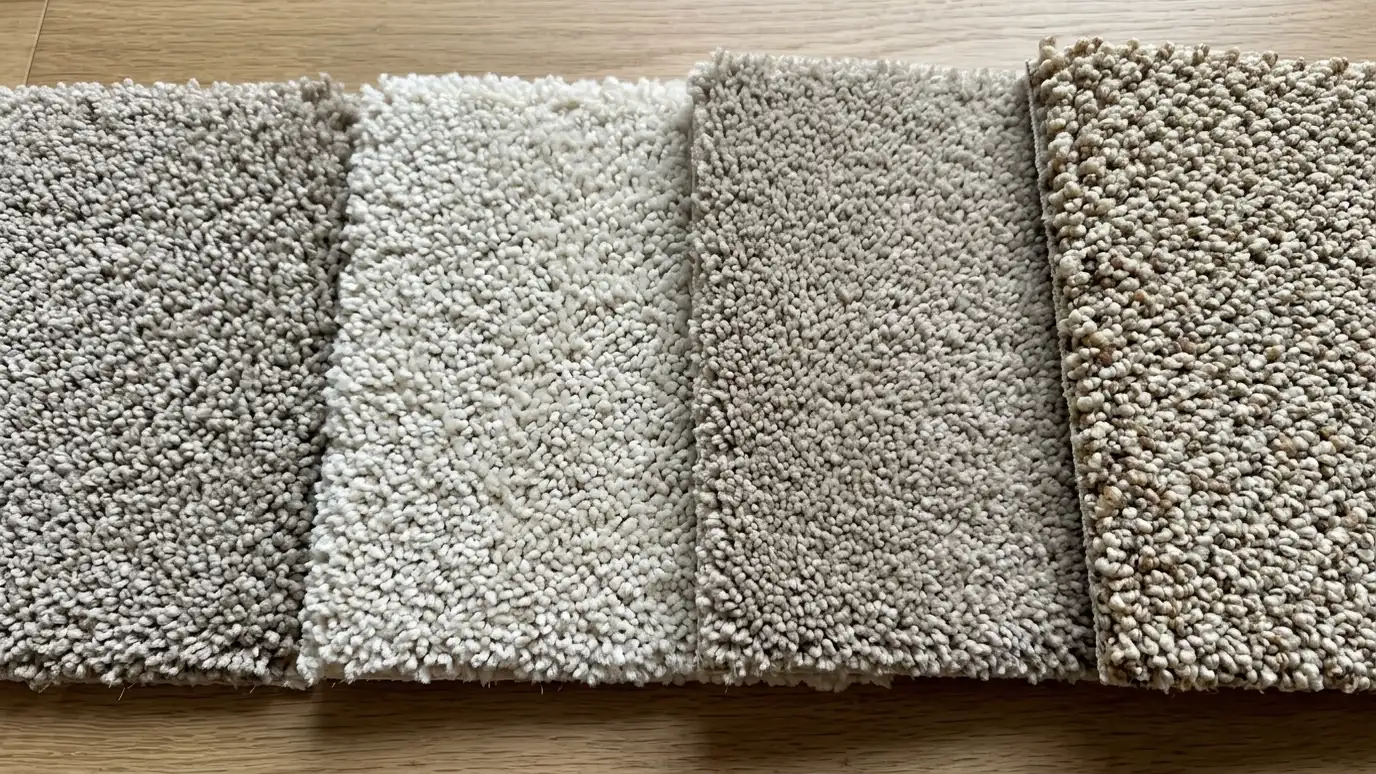
Olefin and solution-dyed carpets handle humidity well. Carpet tiles let you replace a damaged square.
Loop styles hide traffic and are common in lower levels.
Avoid very thick, absorbent materials in damp spaces.
Keep humidity in check
Use a dehumidifier or ventilation to keep the space comfortable, and watch for odors and condensation.
Move furniture slightly away from walls so air can circulate.
If carpet gets wet, dry it quickly and call us for advice.
Make the floor dry first, choose moisture-aware padding or tiles and keep humidity in check.