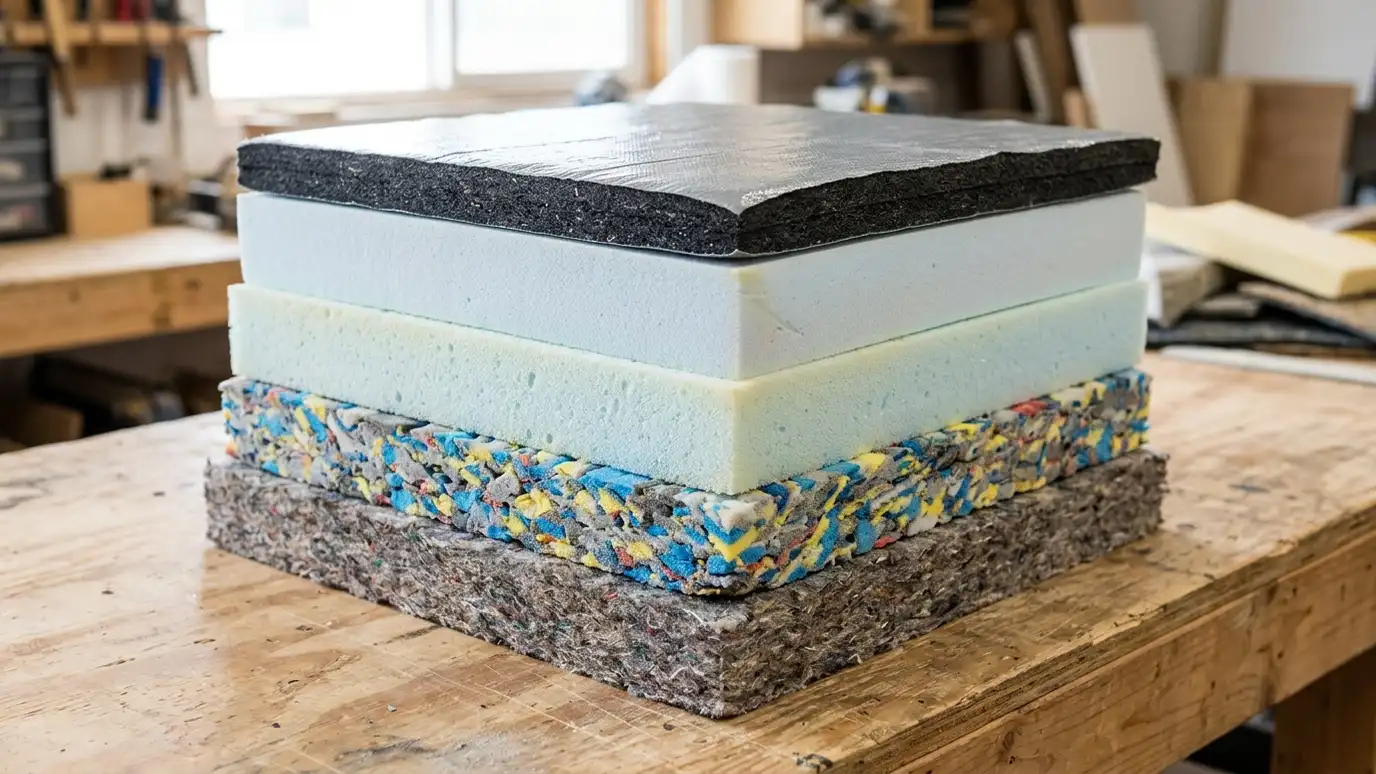
Why padding matters
Padding cushions each step, absorbs impact, adds warmth and sound control and supports the carpet backing. It helps carpet resist crushing and wear.
A poor pad can shorten the life of a good carpet, and a good pad can make an average carpet feel better.
That is why we discuss pad as part of every estimate.
Types of pad
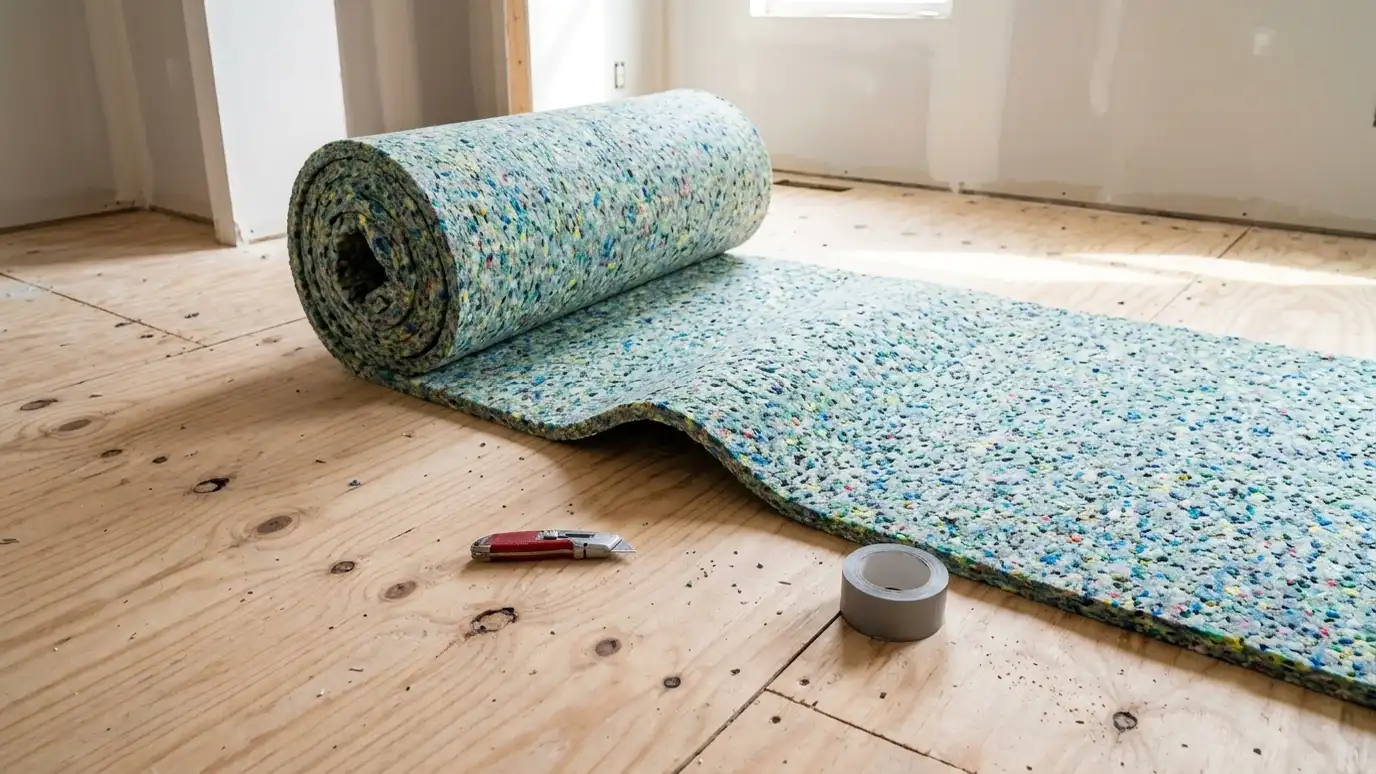
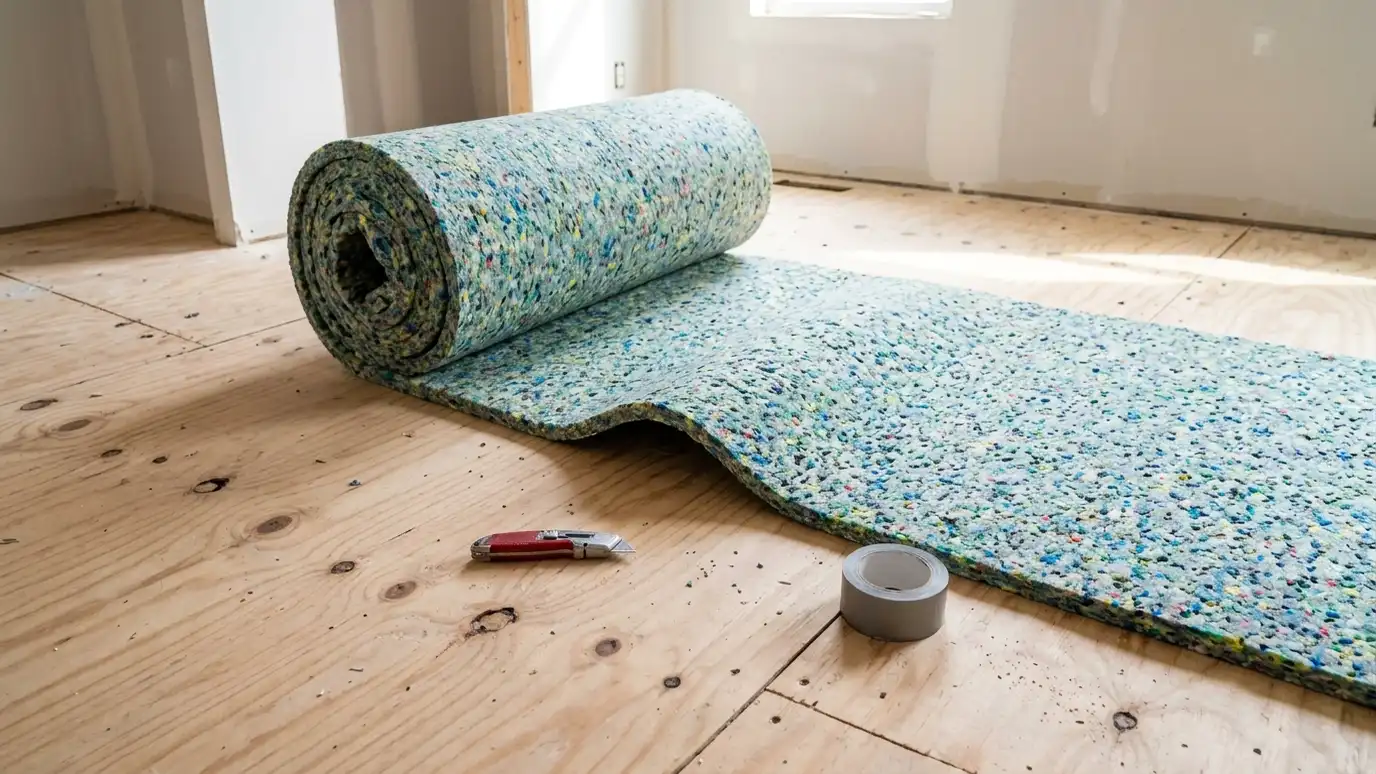
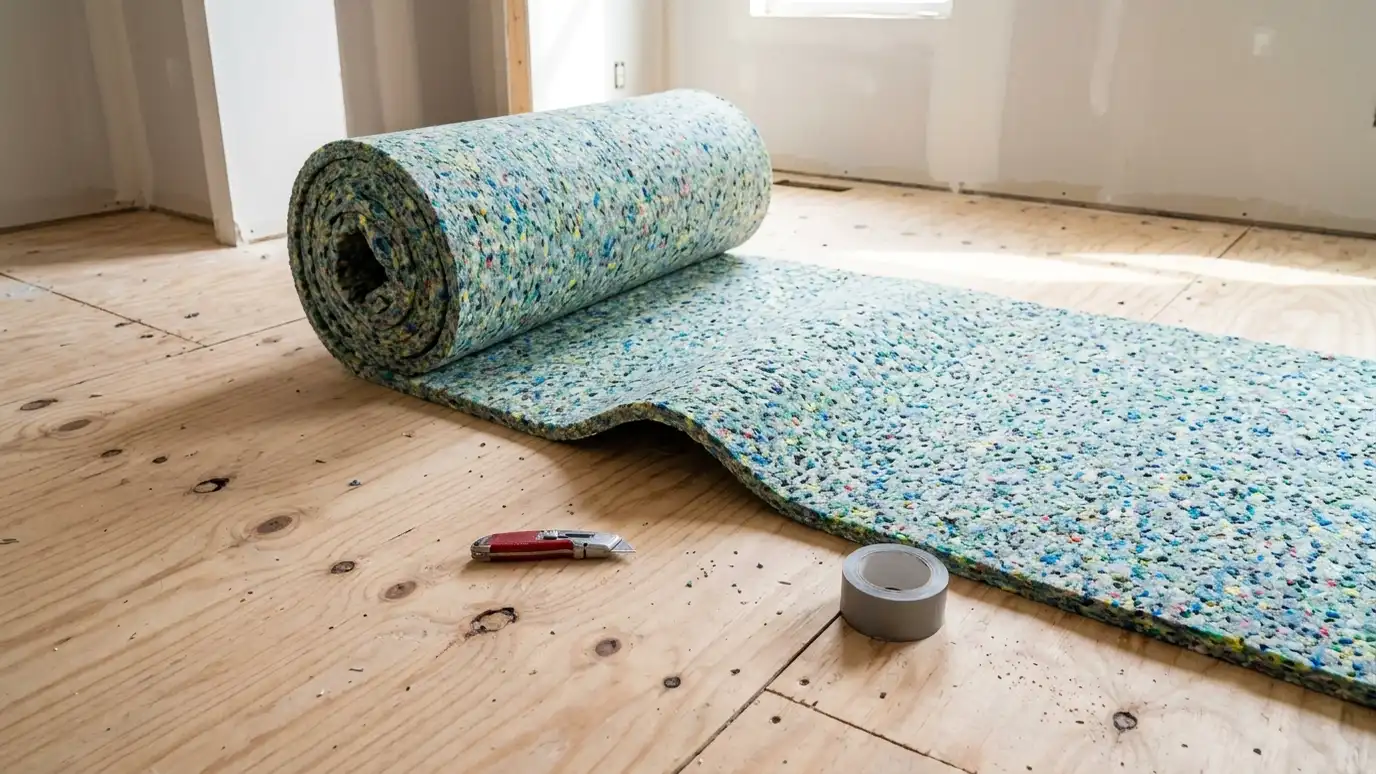
Rebond foam is made from foam scraps pressed together and is the most common residential choice. Prime urethane is new foam, often softer. Memory foam is plush and luxurious. Fiber pads are firm and flat. Moisture-barrier and closed-cell pads suit slabs and basements.
Each has strengths, and the right one depends on the carpet and the room.
We bring samples so you can feel the differences.
Thickness and density
Many people assume thicker is better, but many carpets need a firm, moderately thick pad. Too much cushion can cause wrinkles, seam failure and early wear.
Density often matters more than thickness, because dense foam supports carpet without bottoming out.
Carpet makers often publish limits for pad thickness and density, and we follow them.
Pad for stairs
Stairs need a firm, dense, usually thinner pad, so steps feel stable and carpet stays tight over the nosing.
Plush, soft pad on stairs can feel springy and wear carpet at the edges.
We recommend a pad specifically for stairs and match it to the carpet.
Pad for basements and slabs
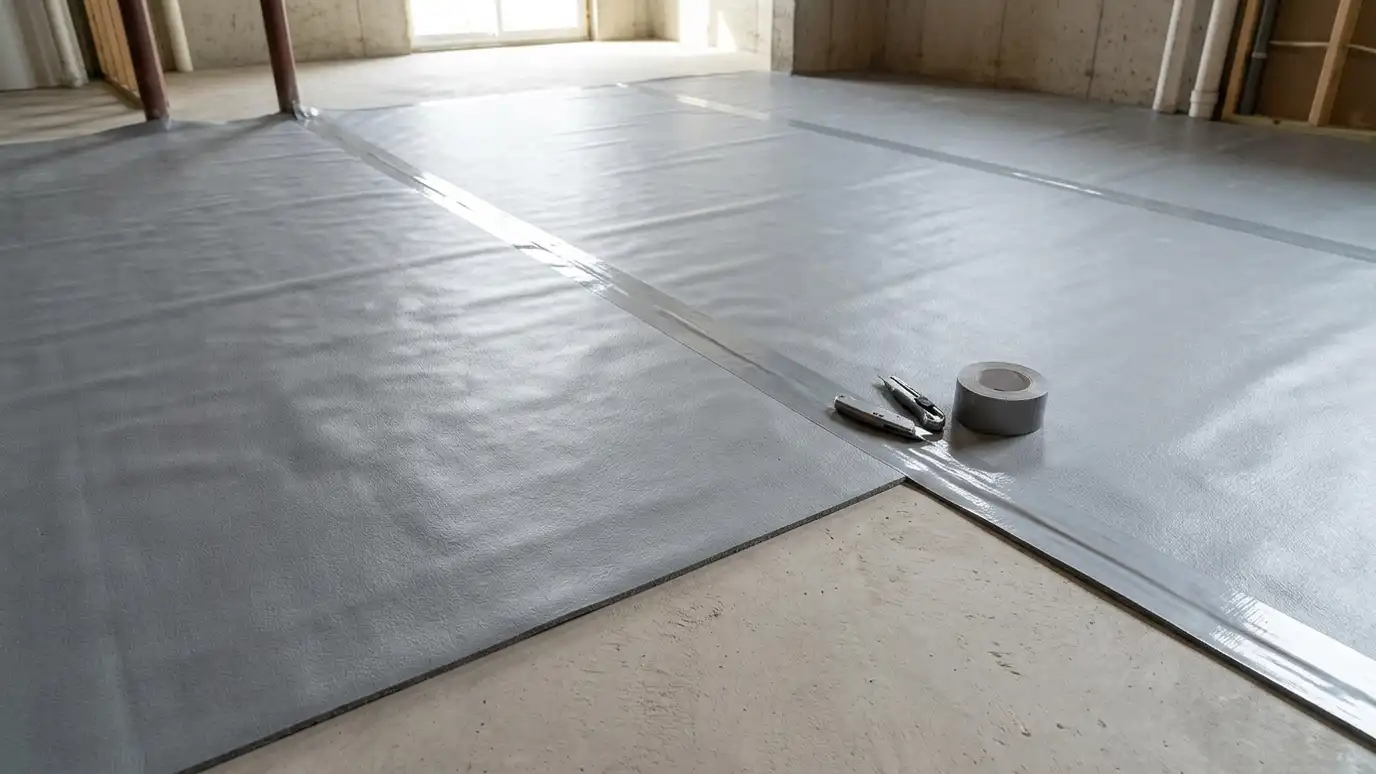
Below-grade floors and slabs may need moisture-barrier or closed-cell pad, along with a dry floor.
Pad cannot fix a wet floor, so address moisture sources first.
We check the floor and recommend a system that suits the space.
Pad for sound and comfort
Dense, resilient pad reduces impact noise, which helps in condos, upstairs rooms and home theaters.
Premium pads add comfort in bedrooms and dens.
Associations may have pad requirements, and we help you meet them.
Choose pad by density and fit with the carpet and the room, not by thickness alone, and follow the carpet maker guidance.