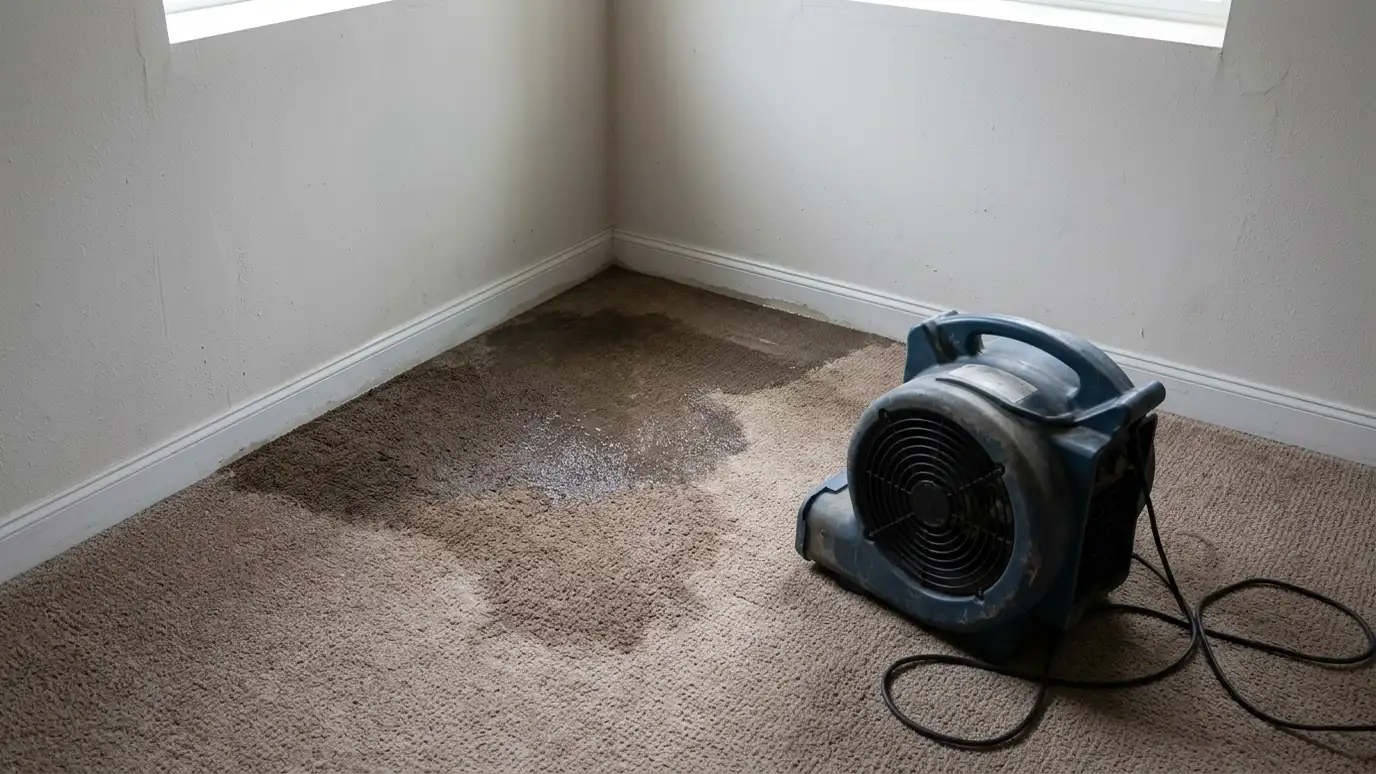
Stop the source and stay safe
Turn off the water source if you can and stay clear of electrical hazards in wet areas. If water is deep or came from outside, put safety first.
Take photos for your records and insurance.
Then start moving contents out of the wet area.
Time and type of water matter
Clean water from a supply line caught quickly can often be handled with drying. Water that sat for a day or two, or that came from a drain or storm, is more serious.
Carpet and pad that stay wet can grow mold within a day or two.
IICRC standards describe categories of water, which help decide how to proceed.
Dry quickly
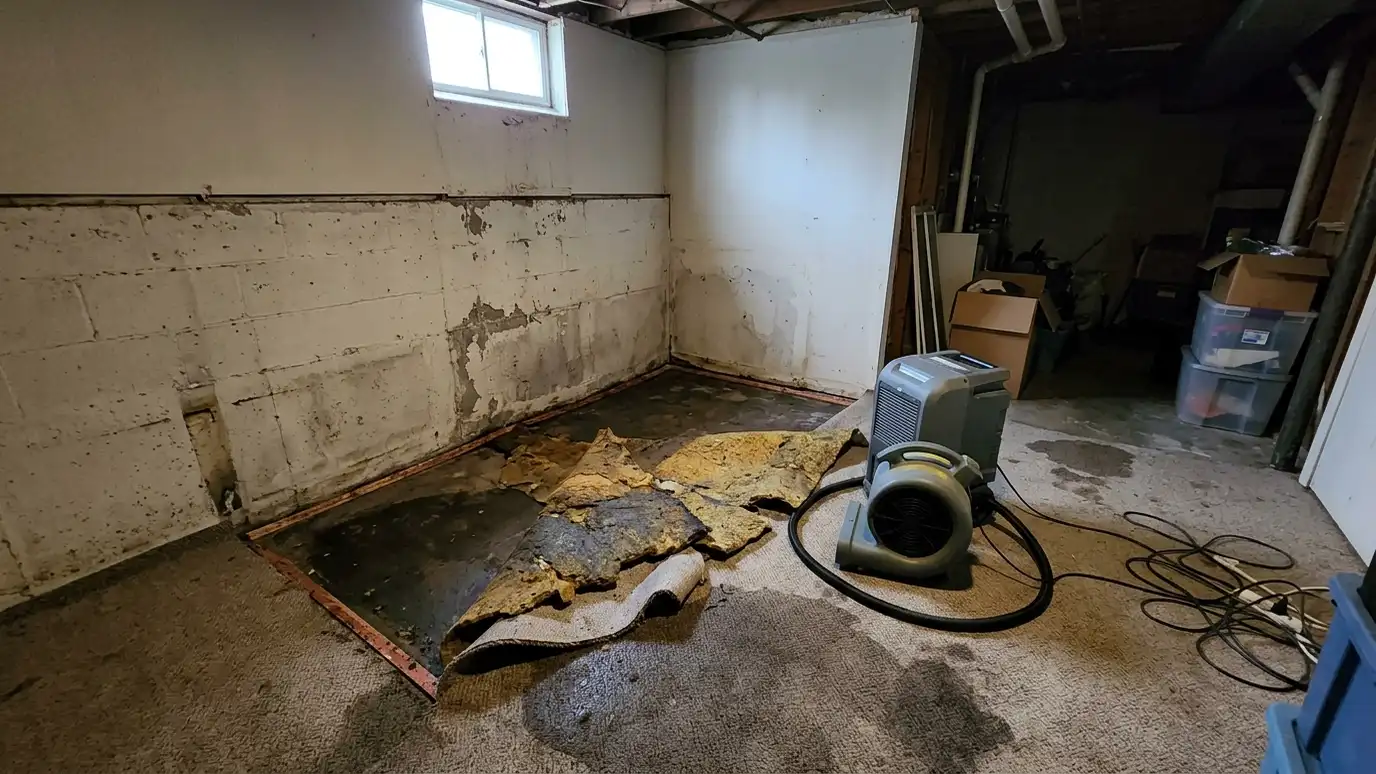
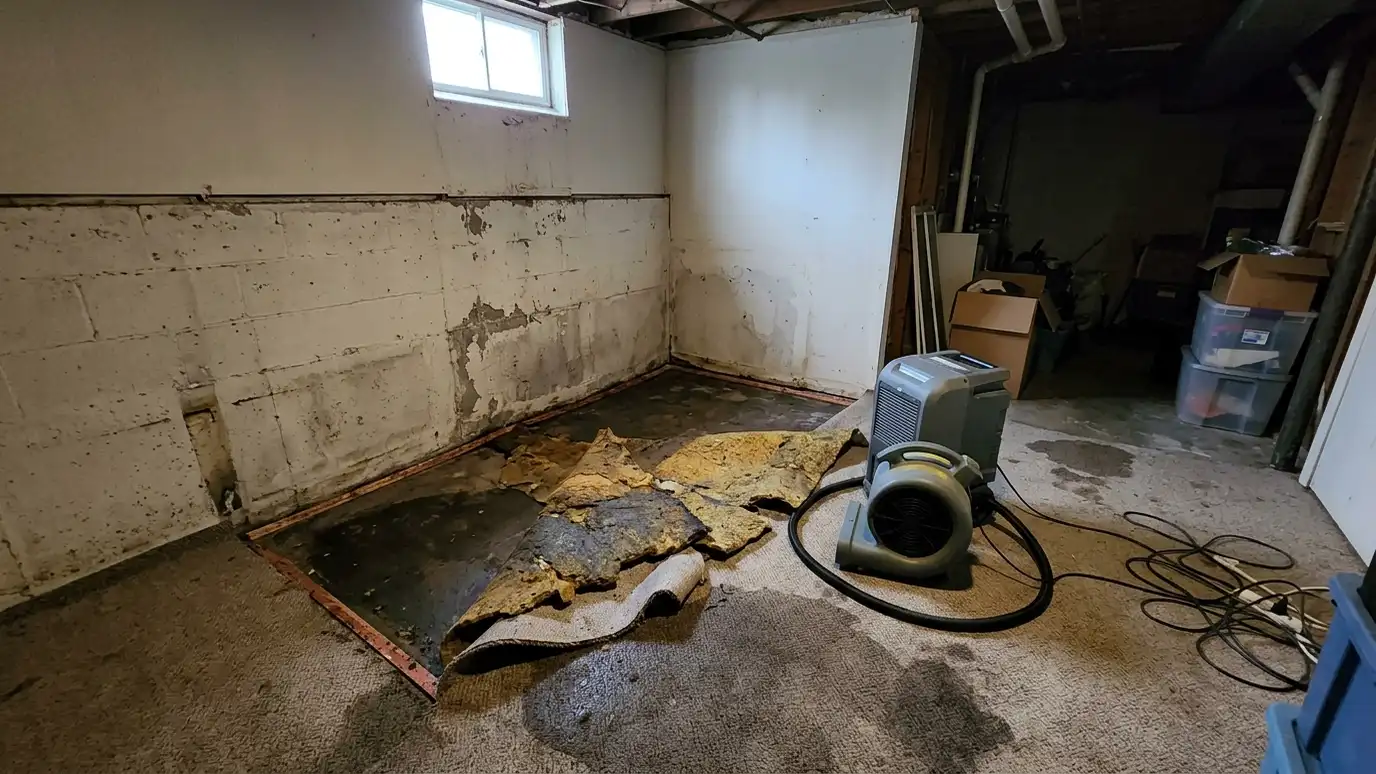
Remove standing water, run fans and a dehumidifier and open windows if humidity allows. Lift furniture off wet carpet and place foil or blocks under legs.
Do not use a household vacuum on standing water.
Professional drying equipment may be needed for larger events.
Pad is often the problem
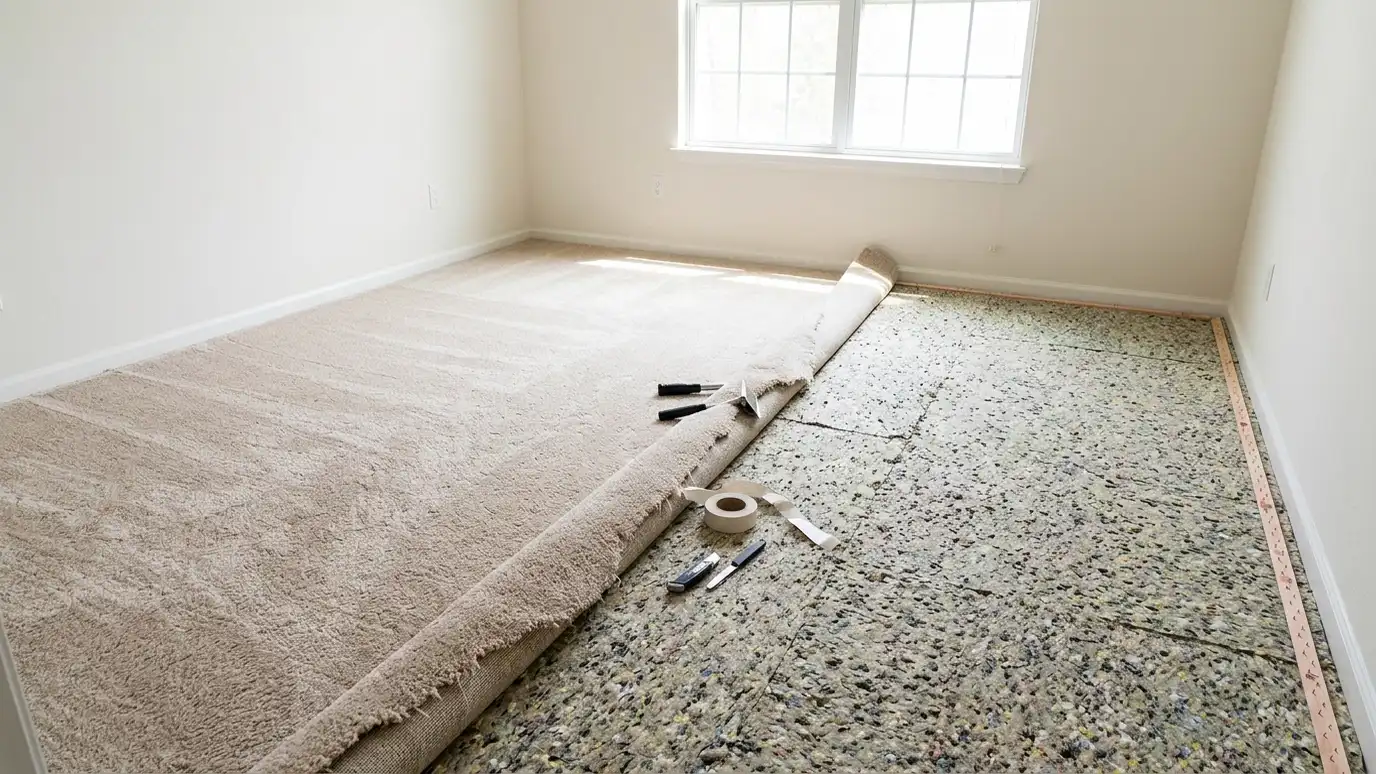
Pad soaks up and holds water, so it is commonly replaced even when carpet can be saved. Pad can also hold odors.
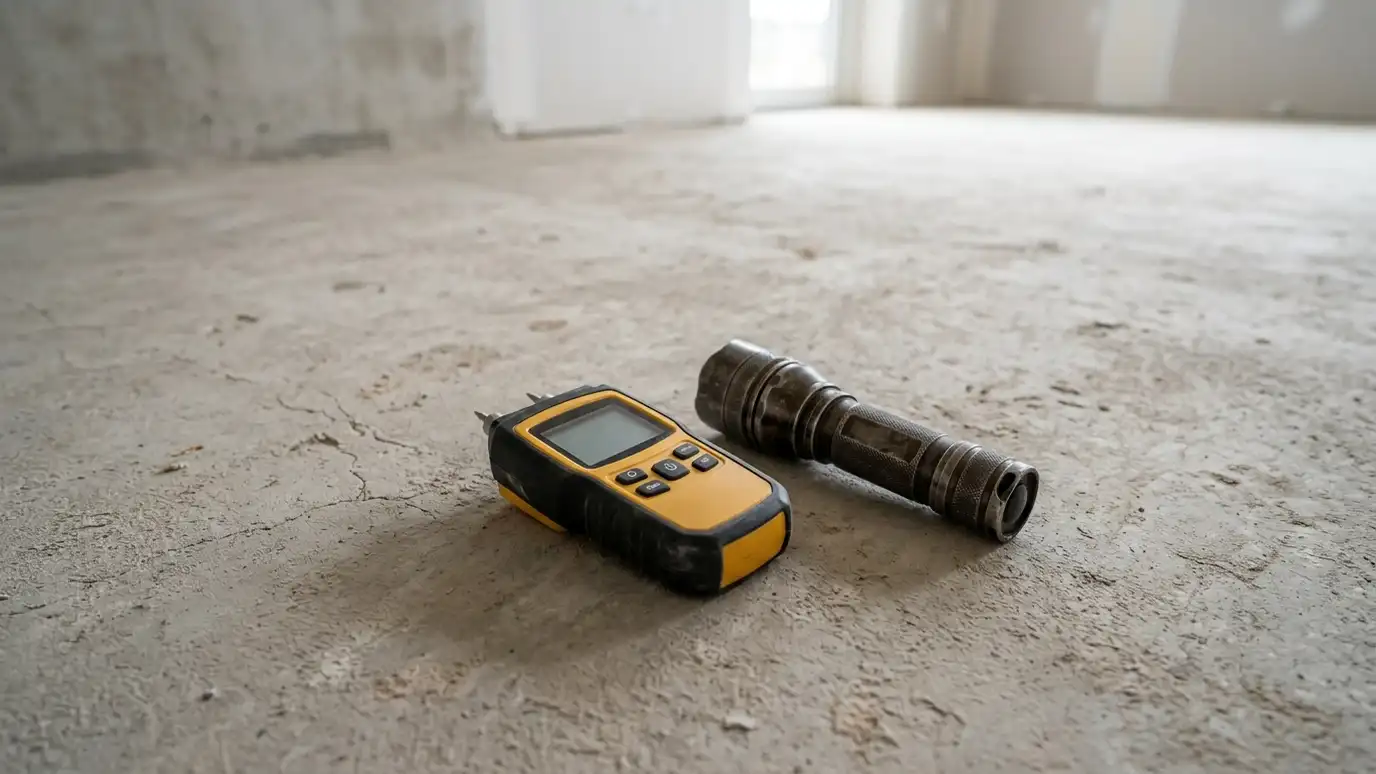
We check pad and the subfloor for moisture.
Replacing pad protects the carpet and the house.
Save or replace
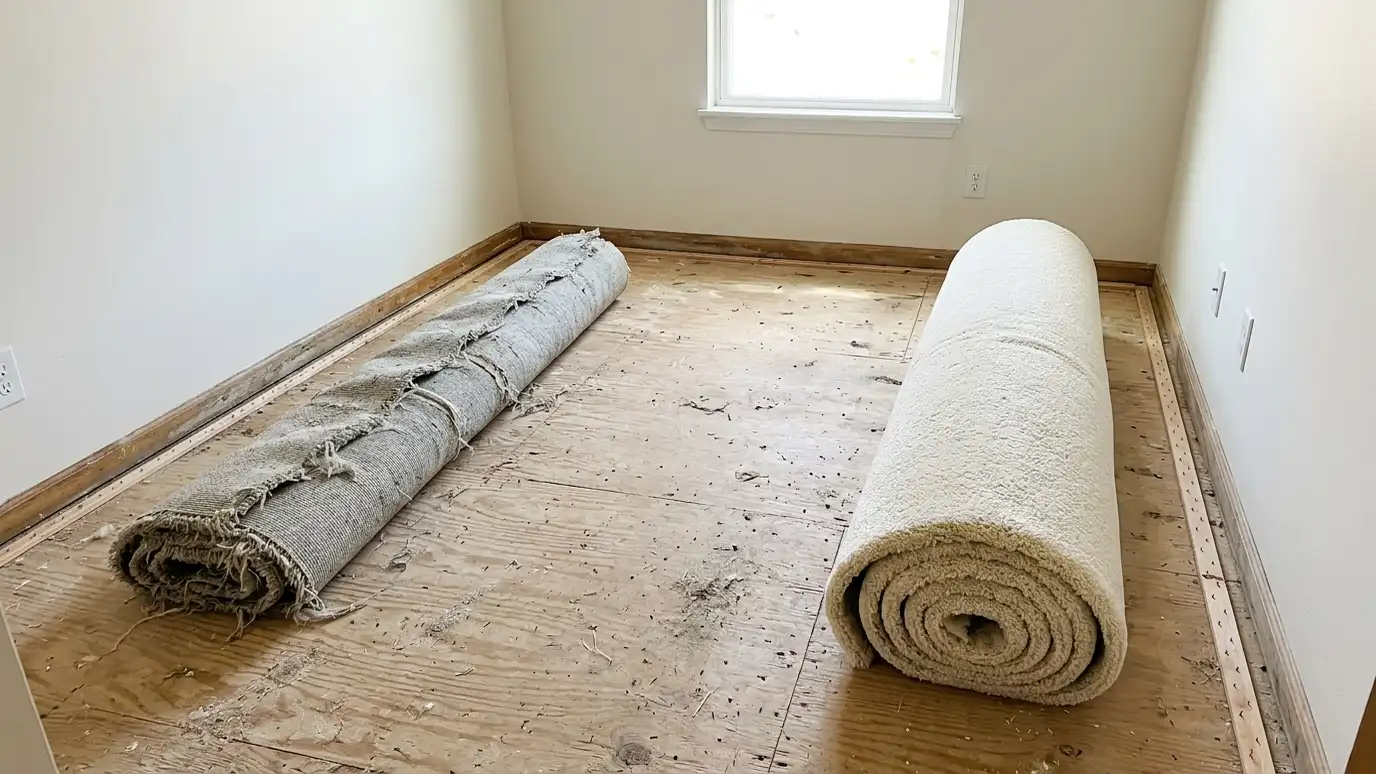
Carpet that is clean and was wet only briefly can often be dried, cleaned and reinstalled. Contaminated or long-wet carpet is usually replaced.
Delaminated backing, odors and mold are signs of trouble.
We give you an honest recommendation.
Prevent a repeat
Fix the cause, whether it is a leak, drainage or a failing appliance. Consider water alarms and humidity control.
In basements, choose moisture-aware padding and tolerant carpet.
Watch weather forecasts and keep gutters clear.
Act fast, make it safe, dry thoroughly and replace pad that stayed wet, and call for advice early.