Measure every space
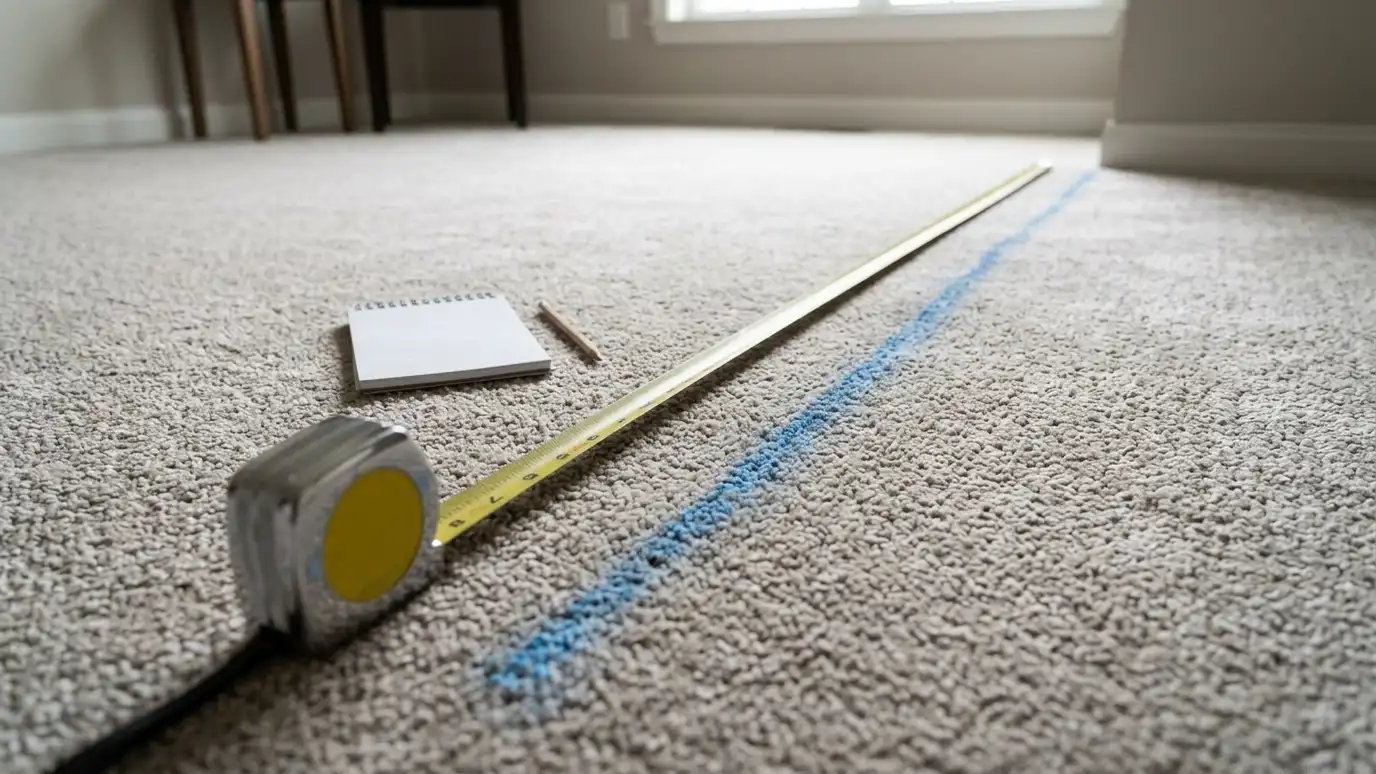
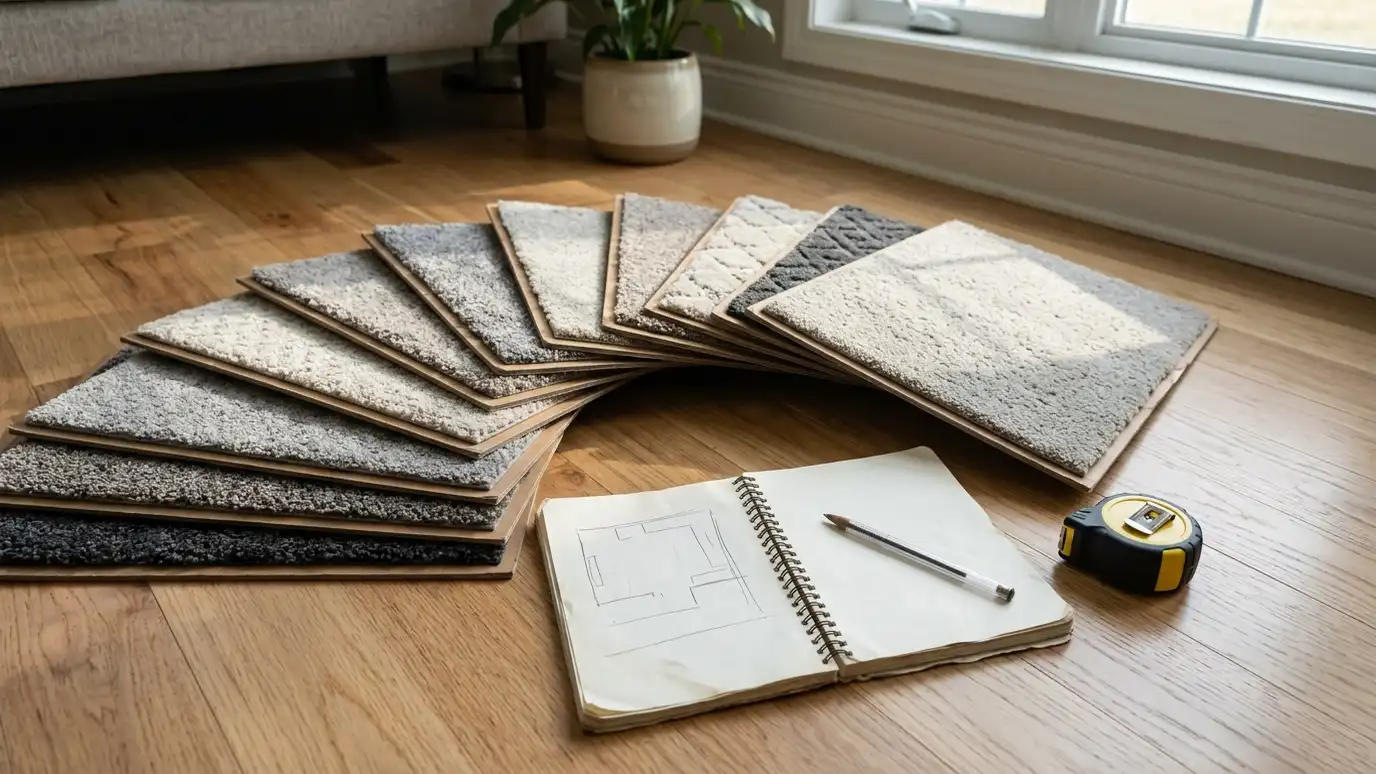
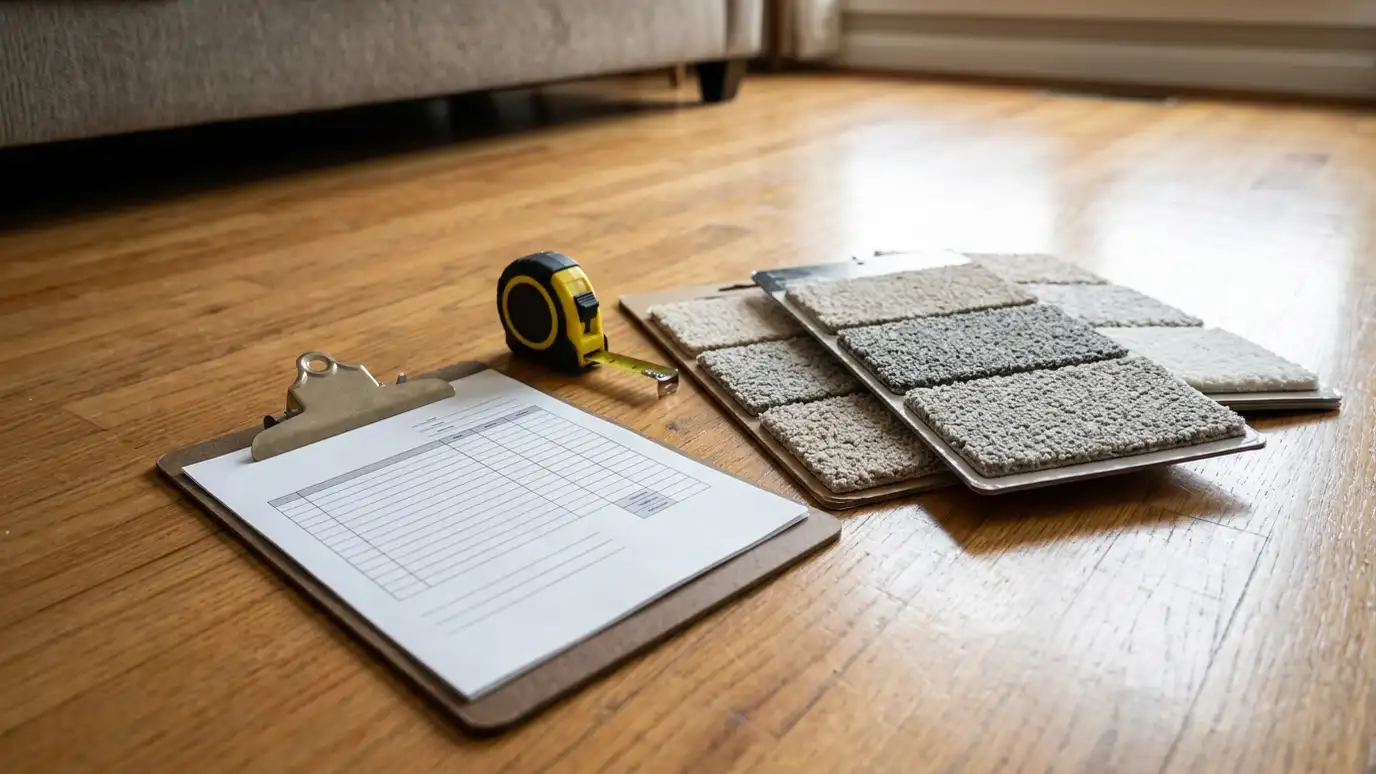
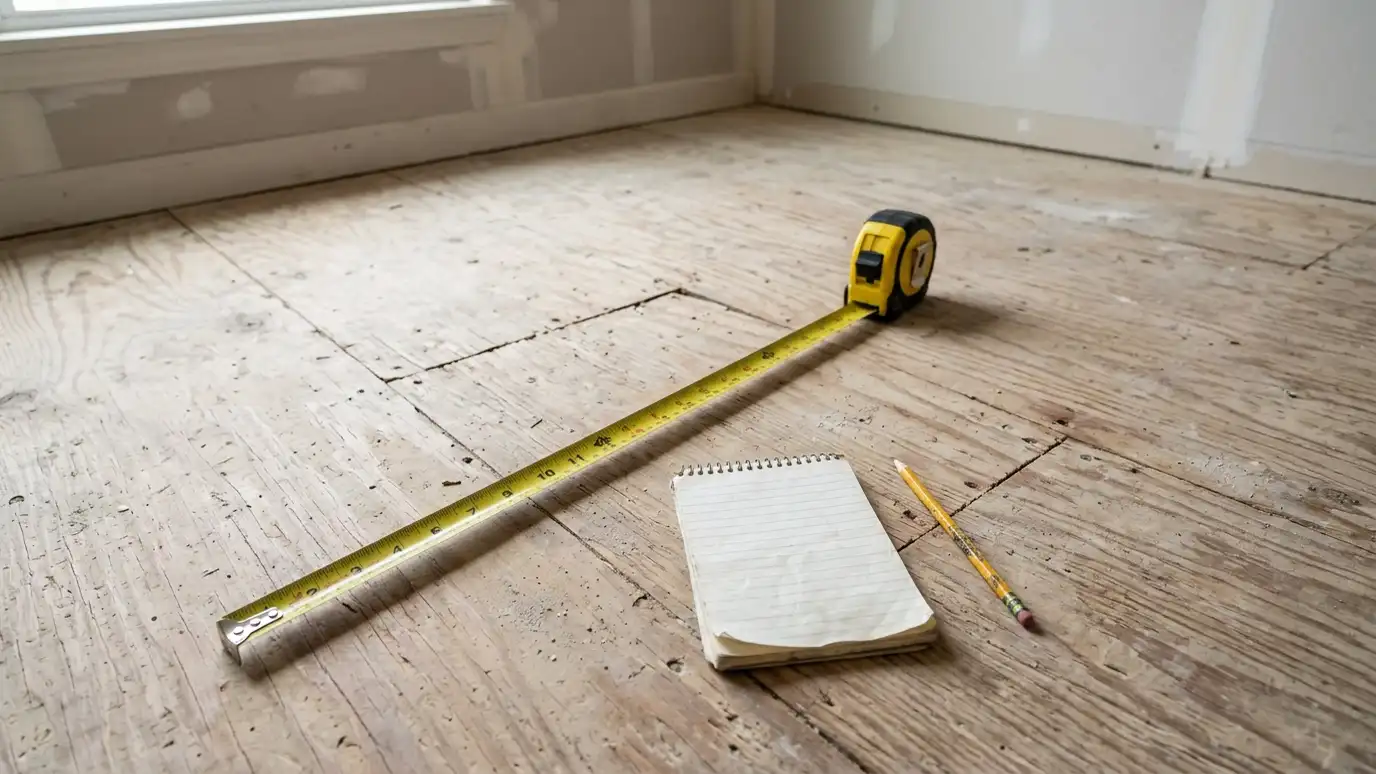
Measure the longest length and widest width of each room, including closets, alcoves and halls. Note doorways, vents, built-ins and changes in the wall line.
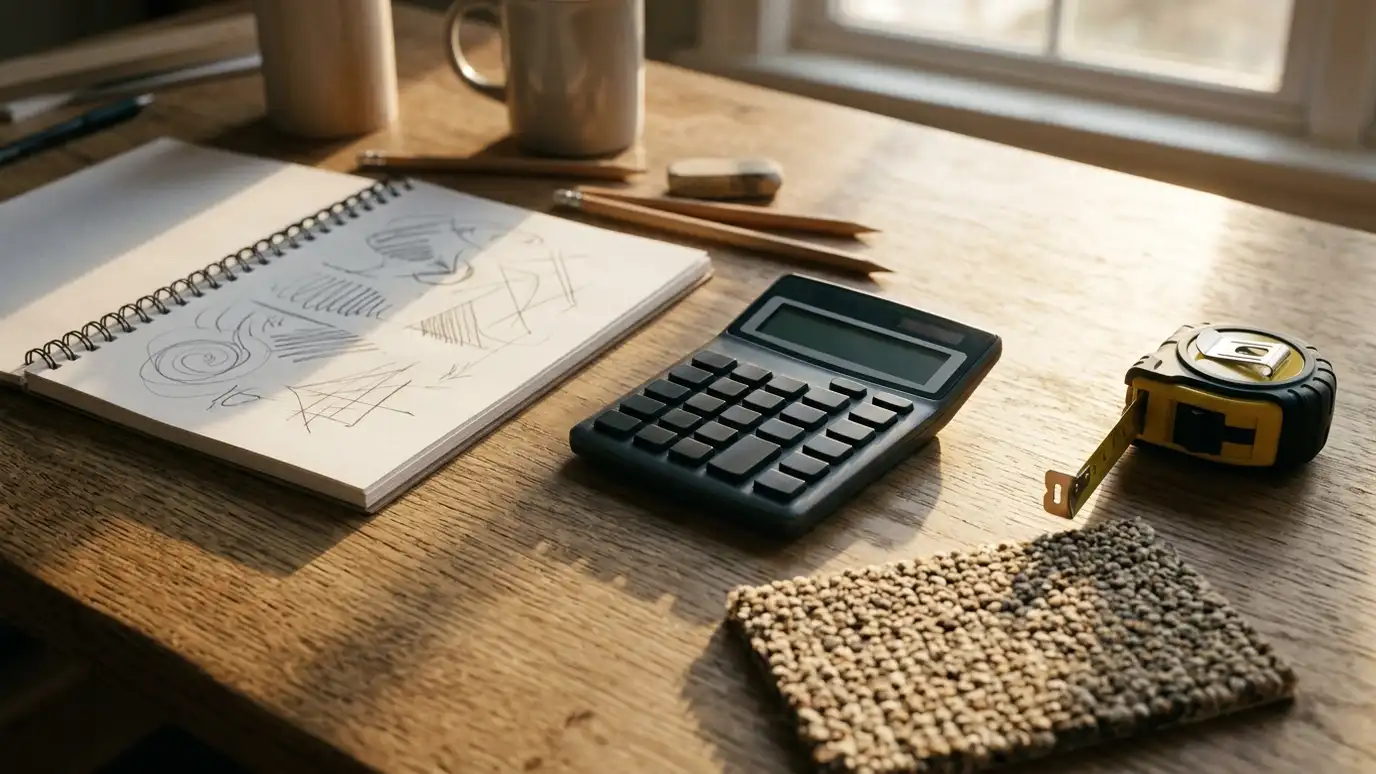
Sketch each room and write the numbers on the sketch.
Photos help us plan.
Roll widths and seams
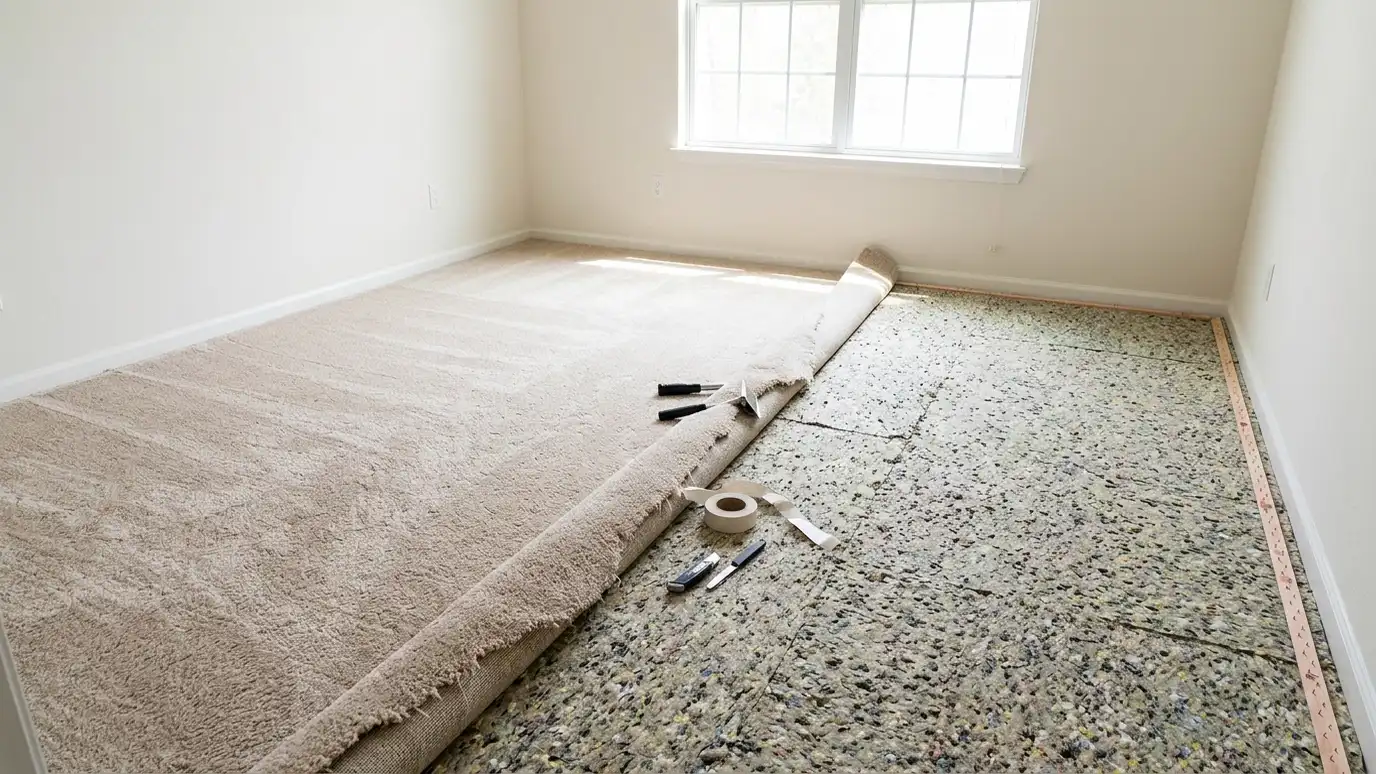
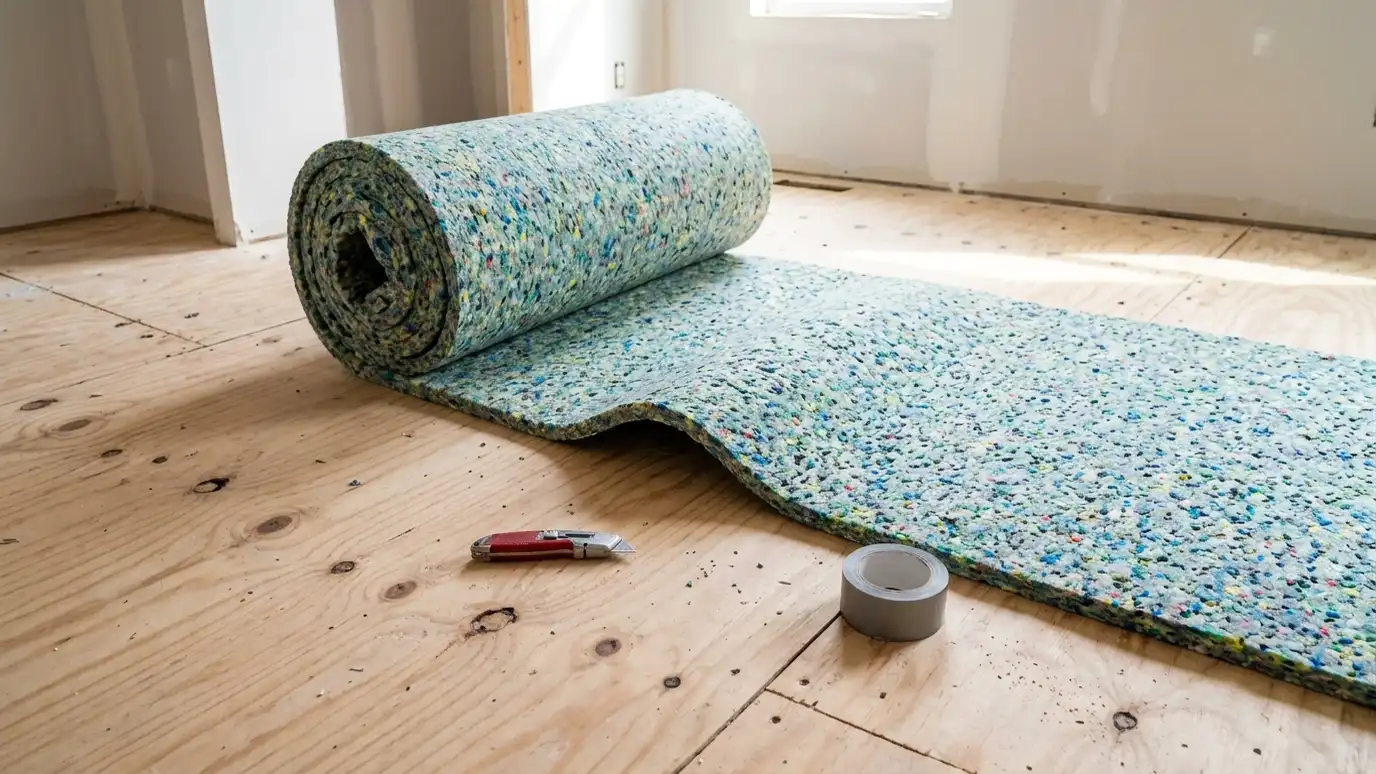
Carpet is commonly sold on twelve-foot-wide rolls. If a room is wider than the roll, a seam is needed. Rooms narrower than twelve feet can often be covered in one piece, with leftover carpet on the other side.
Planning layout so seams fall in good places is part of a careful estimate.
We explain the plan to you.
Waste and pattern
Cutting around a fixed roll width leaves waste, and patterned carpet needs extra for matching repeats. Stairs and odd-shaped rooms add more.
A good estimate includes a reasonable allowance and explains it.
Ask each company how much extra is included.
Square feet and square yards
Carpet is often priced per square yard, and one square yard is nine square feet. To convert, divide square feet by nine.
Pad is often priced the same way.
Make sure quotes use the same unit.
Stairs
Stairs are measured by the step. Measure tread depth, riser height, width and nosing, and count the steps, landings and winders.
Open and curved stairs need special measuring.
We measure stairs in person for accuracy.
Confirm before ordering
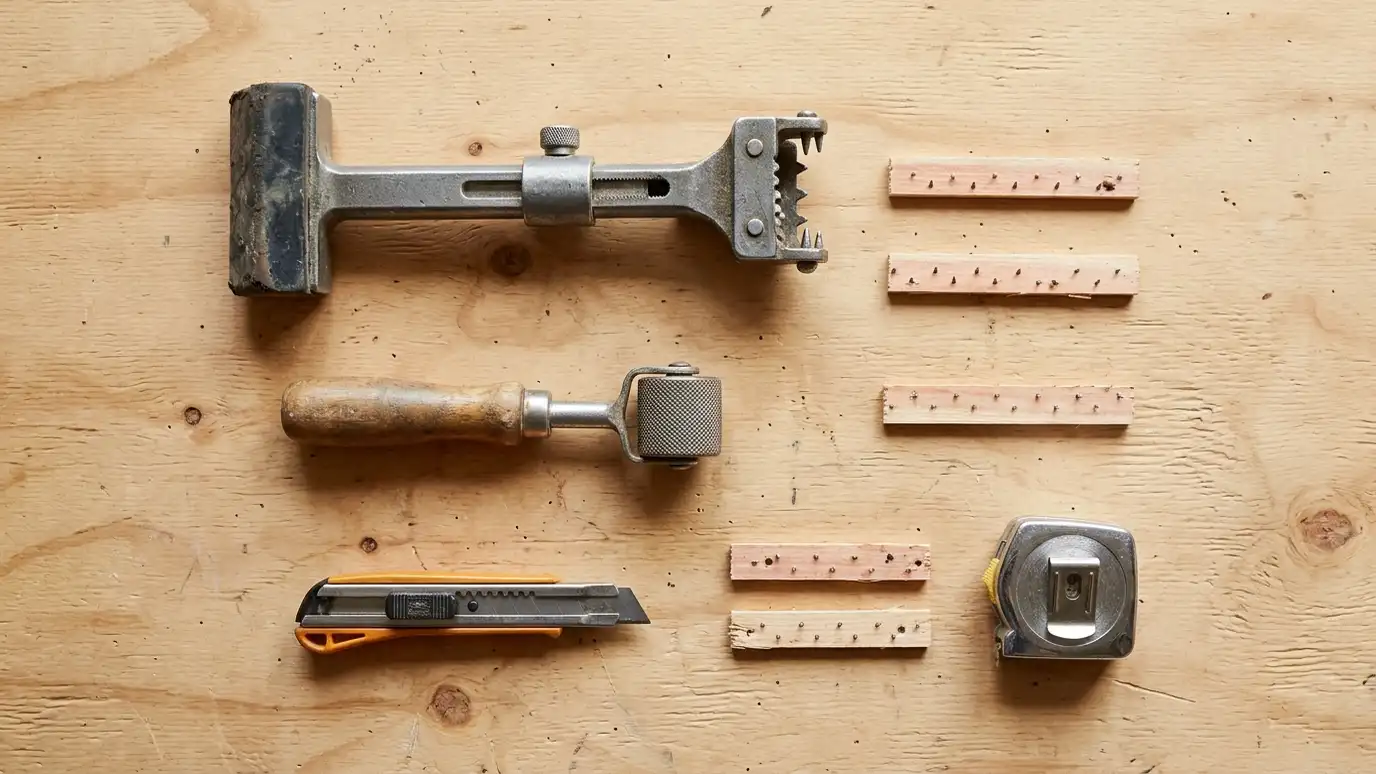
Cut carpet is rarely returnable, so confirm measurements before ordering. A professional measurement visit is part of our Free Estimate.
Check pile direction, dye lot and lead time.
We keep a written record of the measurements and layout.
Sketch every room, plan the roll layout and confirm measurements on site before any carpet is cut.